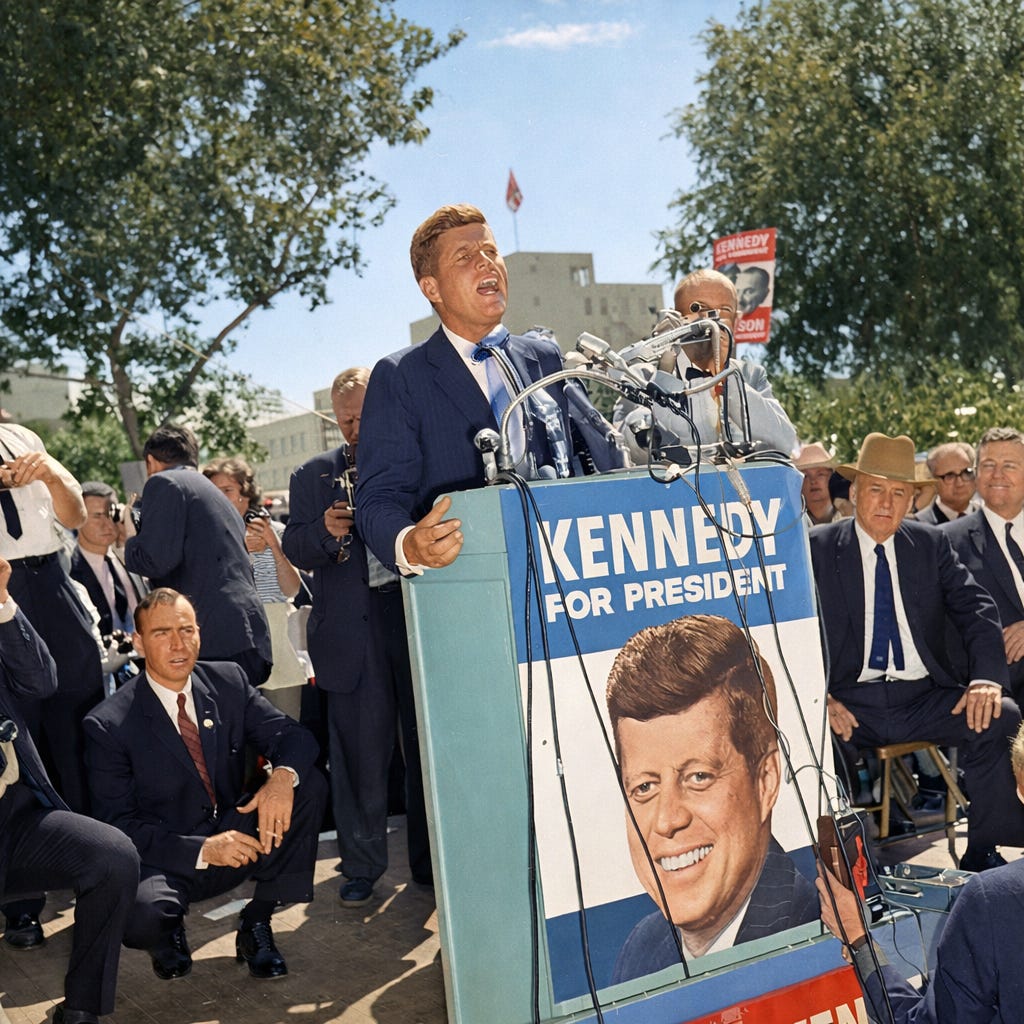
Before 1963
The forgotten 1960 visit when John F. Kennedy came to Fort Worth asking for something simple and incredibly difficult: trust

Most people remember John F. Kennedy in Fort Worth for one morning. Which I guess is better than be remembered for the afternoon of that same day.
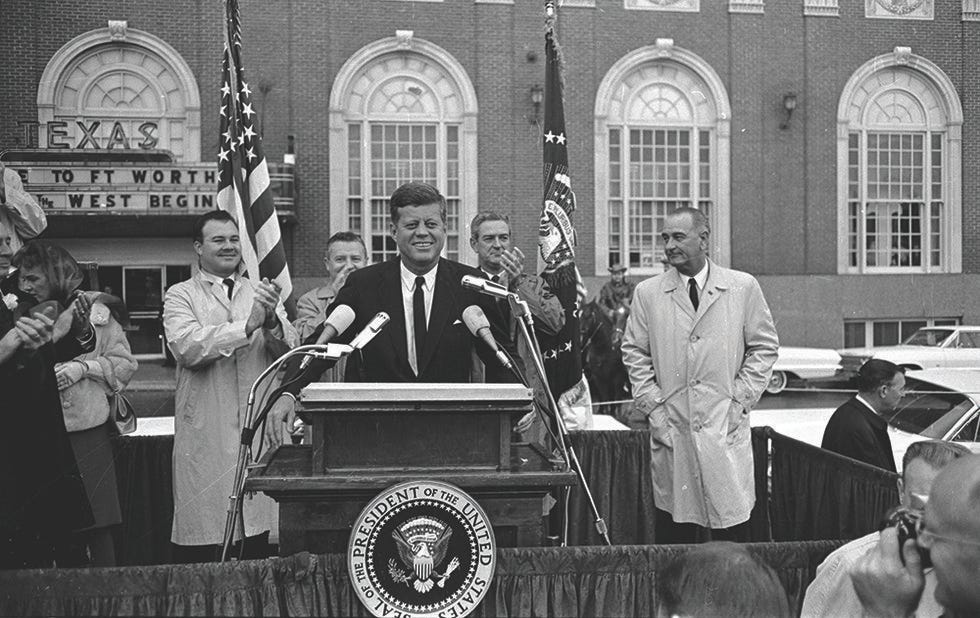
November 22, 1963.
The breakfast speech.
8 Year old Bill Paxton on his dad’s shoulders.
The rain.
The feeling, even before Dallas, that something heavy was in the air.
Lee Harvey Oswald.
But Kennedy came here twice.
Once as President.
And once, three years earlier, as a candidate who still had something to prove.
Because, well, Texas can never be simple. By September of 1960, Kennedy wasn’t just passing through Texas. He needed Texas. Not in a polite, “nice to have you” way. In a win-or-lose-the-presidency way.
Texas carried 24 electoral votes. It was big, loud, proud, and deeply divided.
Democrats ran the state, but not all Democrats were the same. Some were urban, union-backed, and forward looking. Others were conservative, skeptical of Washington, and not entirely sure about this young senator from Massachusetts with the perfect hair and the Catholic problem.
On top of that, the parties were shifting, and one year later, in 1961, an important role in ending Democratic control of Texas politics came with John Tower’s election to the U.S. Senate.
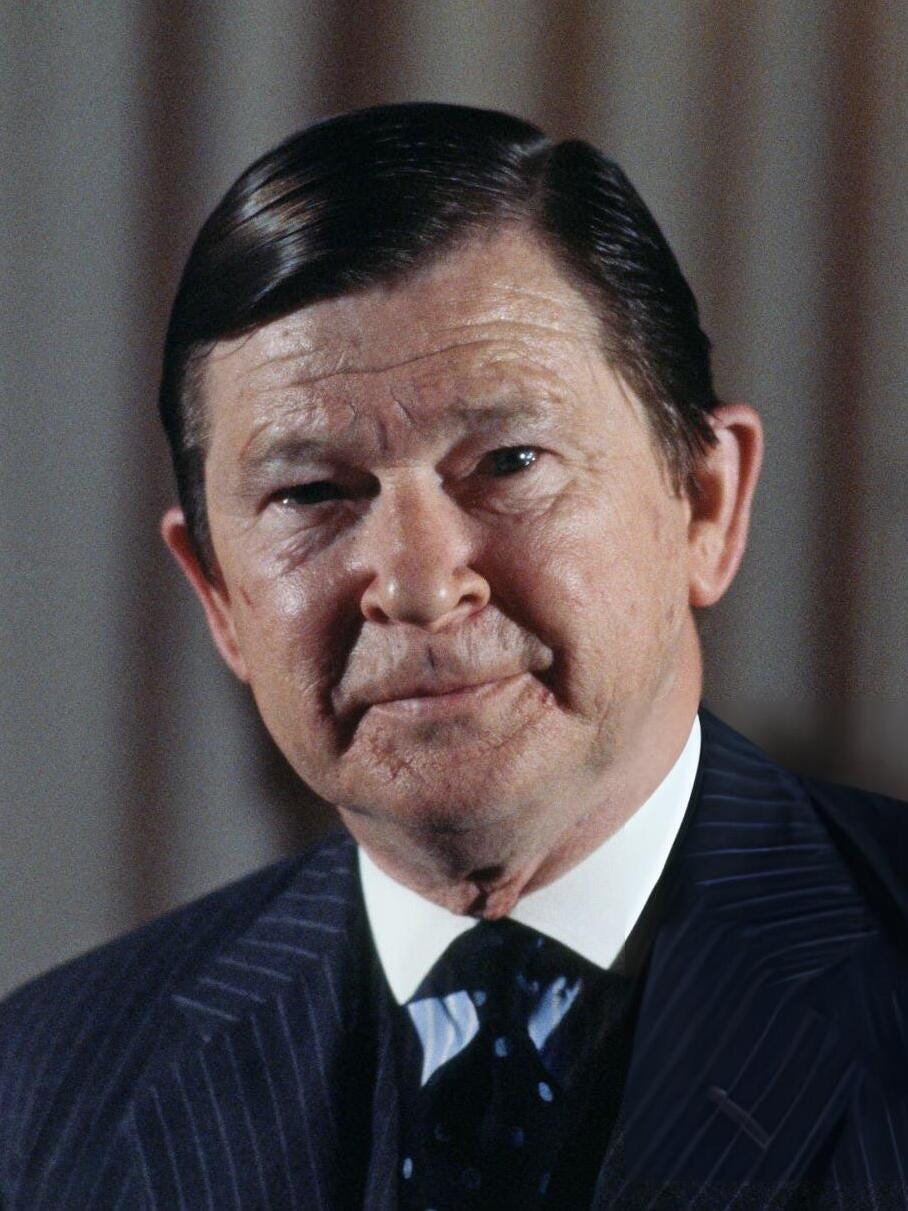
And then there was Richard Nixon, hovering just close enough to make everyone nervous. Which is also the word I’d use to describe Nixon.
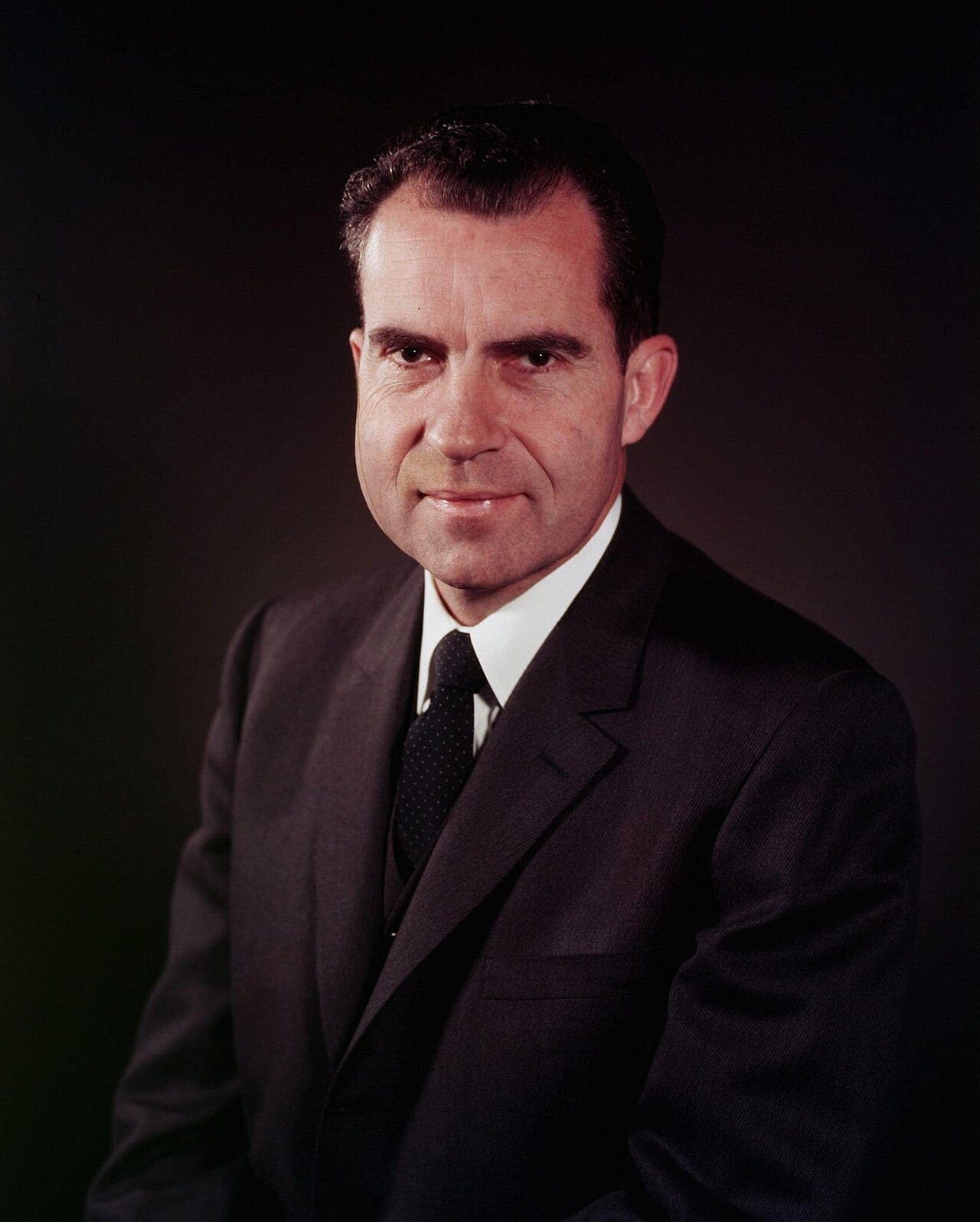
So Kennedy came to Texas with a checklist:
Hold the party together.
Lean on Lyndon B. Johnson to make the South comfortable.
Prove he wasn’t too liberal, too young, or too anything.
And most of all, deal with the religion question that followed him everywhere like a shadow.
Like this question: “Was the Pope going to live in the basement of the White House and run the country thru Kennedy?”
So, the day before Fort Worth, Kennedy stood in front of a room full of skeptical ministers in Houston and said something that still echoes:
“For while this year it may be a Catholic against whom the finger of suspicion is pointed, in other years it has been, and may someday be again, a Jew… or a Quaker…. or a Unitarian…. or a Baptist. Today I may be the victim… but tomorrow it may be you.”
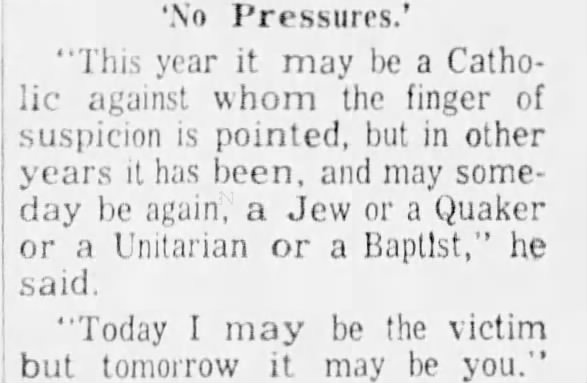
It was one of those lines that feels like it belongs to every decade.
You read it now and think…. what’s that line about history repeating itself?
He added:
“I am not the Catholic candidate for President. I am the Democratic Party’s candidate for President who happens also to be a Catholic.” and followed with “I believe in an America where the separation of church and state is absolute… where no public official either requests or accepts instructions on public policy from the Pope, the National Council of Churches, or any other ecclesiastical source.”
He didn’t dodge the issue. He ran straight at it. Separation of church and state. Constitution over creed. No apologies.
And then, with that still hanging in the Texas air, like the cigarette smoke in my grandma’s living room in Glendive, Montana he got on a plane and flew to Fort Worth.
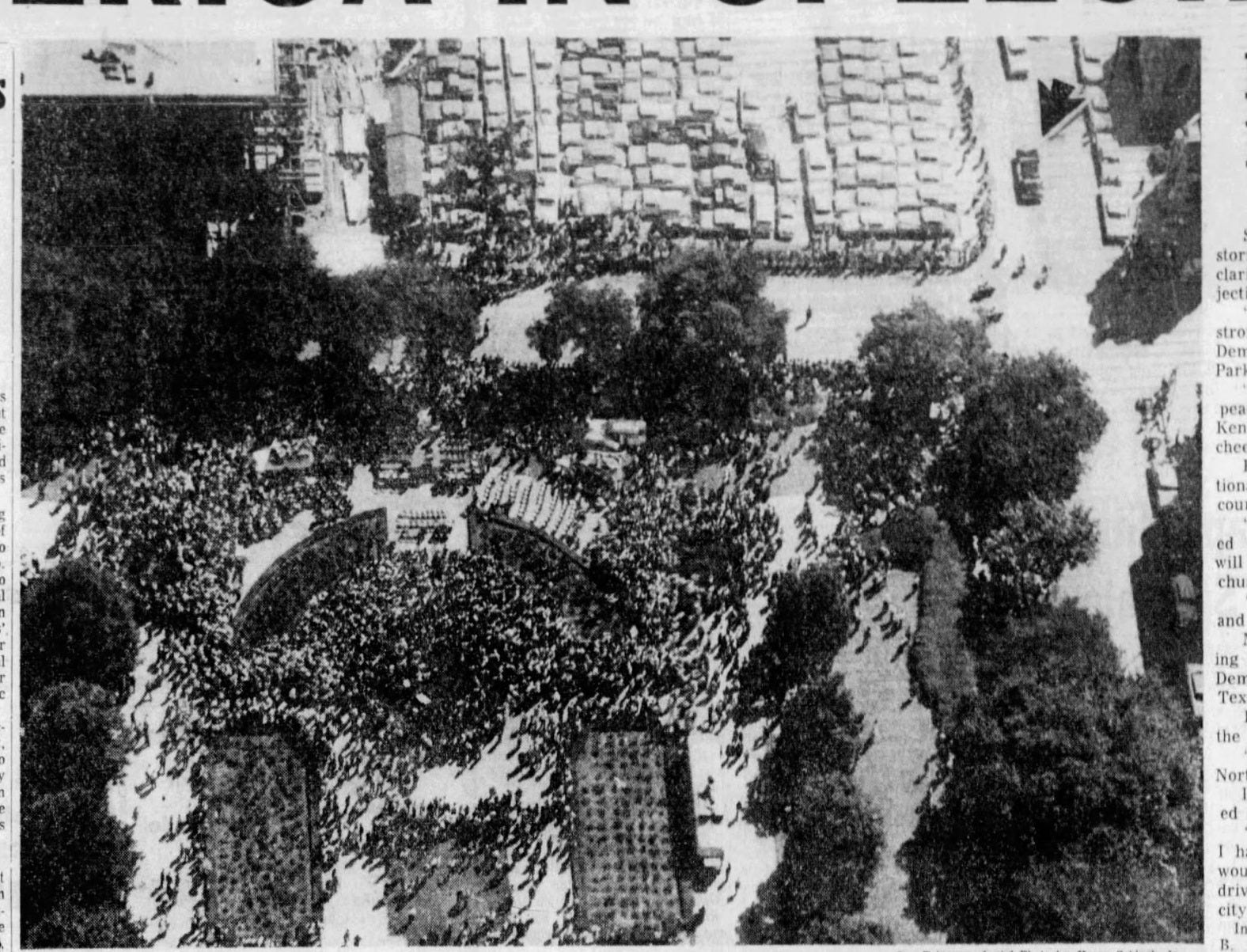
Which bring us to September 13, 1960 in Fort Worth at Burnett Park.
Fort Worth was his first stop that morning.
He landed at Meacham Field around 10:15, about 35 minutes late, which feels exactly right for a campaign stop that was already running too fast for its own good. About 350 people were waiting at the airport. More were already downtown.
The motorcade rolled down North Main, turned onto Houston, and headed straight into the city’s front yard: Burnett Park.
If you stood there in 1960, you would have seen something different than today.
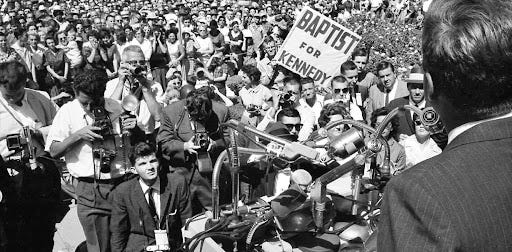
The park still carried the bones of early Fort Worth. Donated in 1919 by Burk Burnett. Designed in the orbit of George Kessler’s city planning ideas. A goldfish pond in the middle. Benches around the edges. The Medical Arts Building looming nearby, photographers leaning out of its upper floors trying to get a better look at history.
As my friend Rick Selcer points out, a Secret Service nightmare today.
By 8:00 that morning, people were already waiting.
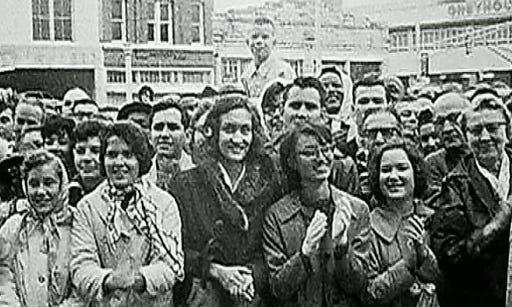
Downtown emptied itself into the park. Office workers on coffee breaks that turned into something longer. Men in ties. Women in heels. People who had work to do but decided, just this once, it could wait.
Estimates of the crowd ranged from 7,000 to 15,000. Just depends on who you ask.
Jim Wright, and Fort Worth’s cheerleader, called it the largest political crowd Fort Worth had ever seen and The Star-Telegram described it as a “cosmopolitan crowd,” which is a very Fort Worth way of saying everybody showed up.
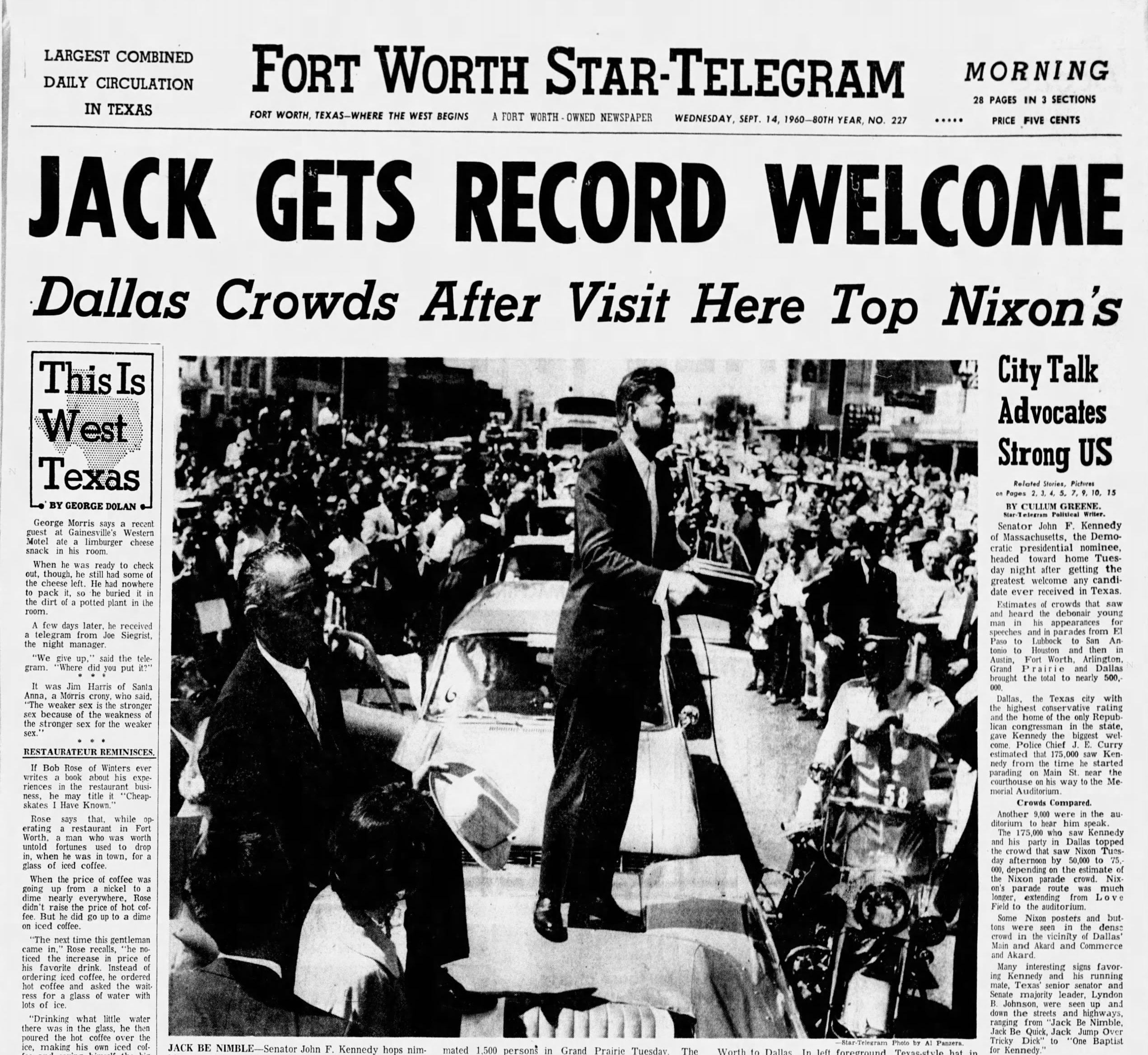
People came for different reasons. Some came because they liked him. Some came because they weren’t sure about him.
Mrs. Belle Reeves, of 3728 Modlin Street*** said simply:
“I think I’m for him now… he was so impressive last night on TV. with all his answers to the religious questions”
(*** The Newspaper used to put your address in if you were quoted, I guess to prove you were a real person. I love this.)
Another admitted what most campaigns are really built on: curiosity.
Mrs. James N. Parker of 2512 Boyd Street, a housewife and Nixon volunteer, admitted she “just wanted to see what he looks like.”
Frank Martin, said, “I never saw of heard in person a man running for President of the United States, and I’ll give $5 to his campaign fund if I get to shake his hand”
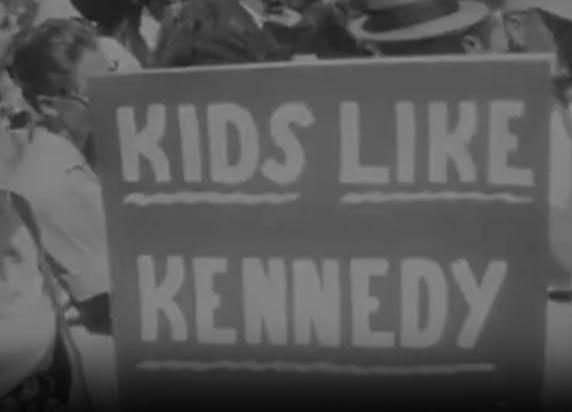
And then there were the signs.
Campaigns are remembered by their slogans, but crowds are remembered by their signs.
One read:
“Jack be nimble,
Jack be quick,
Jack jump over
Tricky Dick.”
I love it. You can almost hear the laughter rolling through the park.
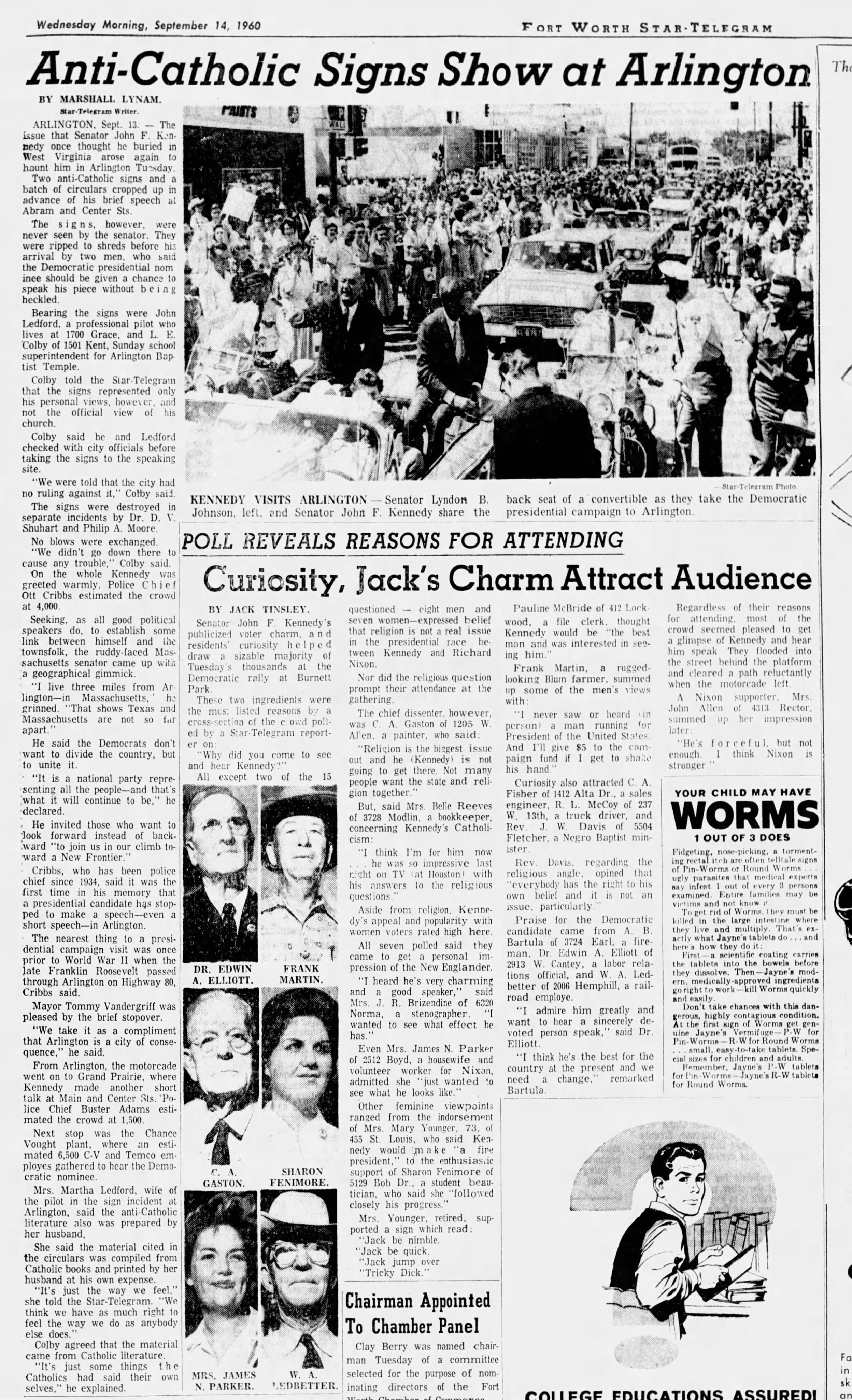
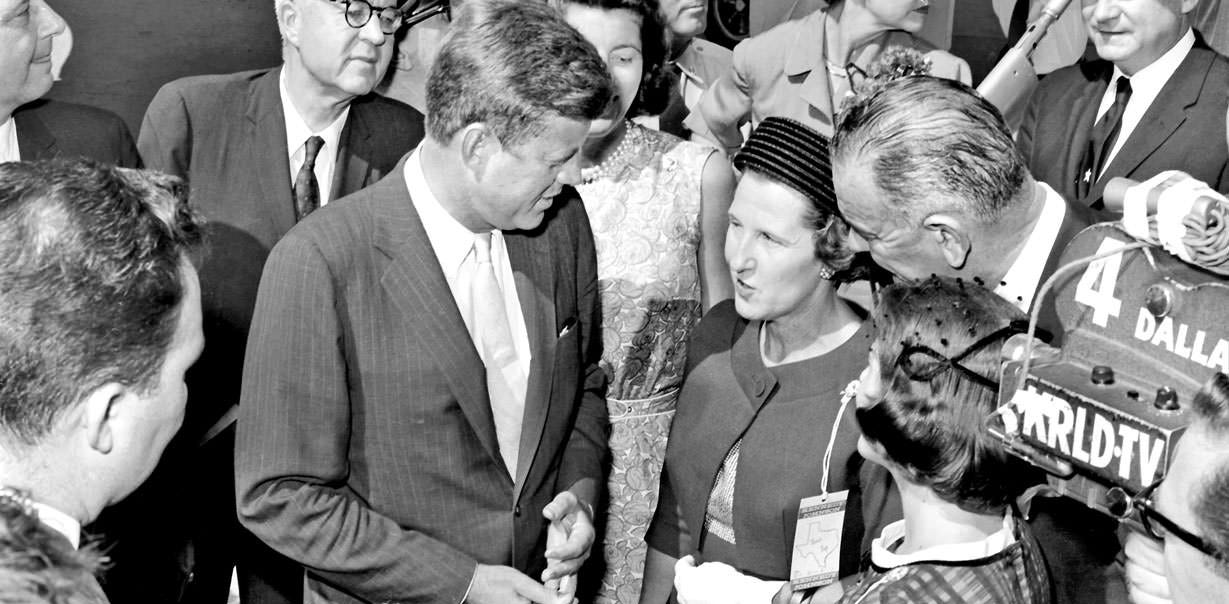
Kennedy rolled in and got to work, he didn’t stay long. He couldn’t. Dallas was waiting.
But for a few minutes, he stood under the magnolia trees and did what he did best. He made places feel connected to something bigger.
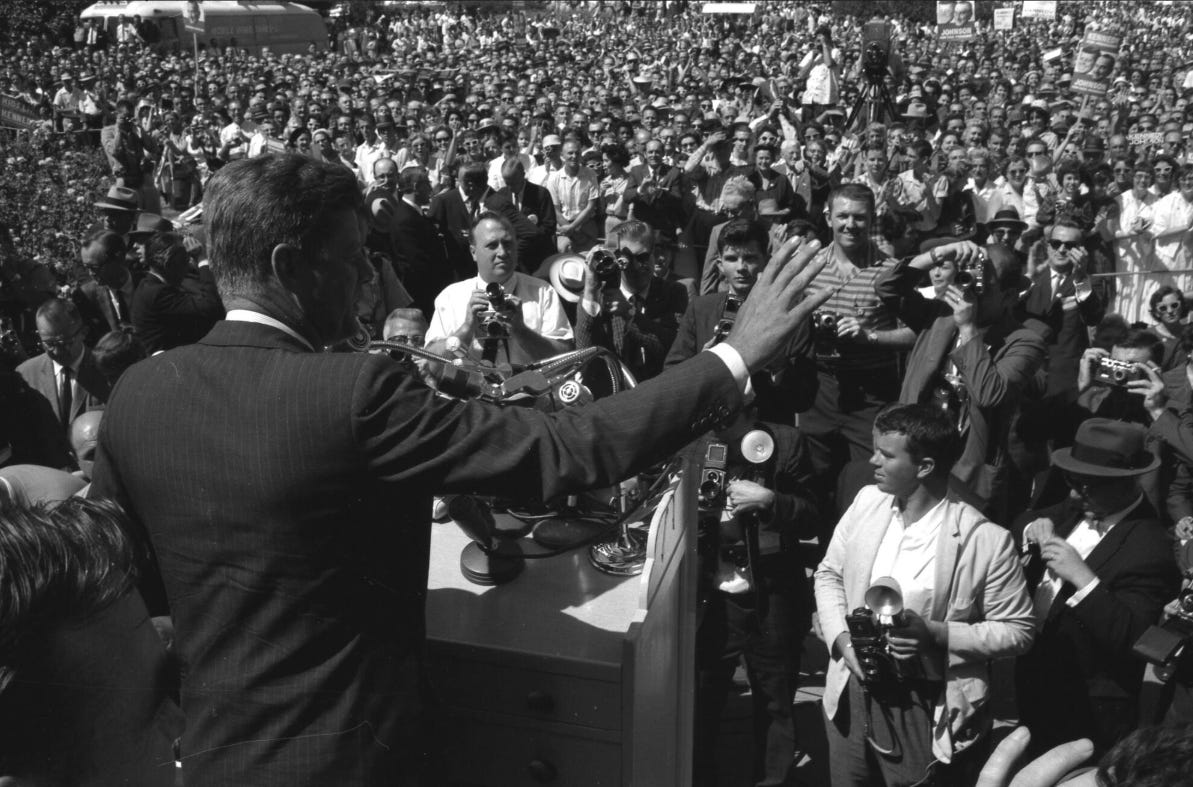
He reminded Fort Worth of its past:
“This city… was built as an armed camp for the defense of this part of Texas…”
And then he connected it to the Cold War present:
“…today [it] serves… for the security of the entire free world.”
He talked about planes built in Fort Worth serving as a shield for the United States. About Boston and Texas being “sisters under the skin.” About a Democratic Party that stretched across the whole country.
And then, almost casually, he delivered one of the best lines of the day:
“I hope the Vice President… will not confine his visits to Texas to the city of Dallas… but will drive the 30 miles to Fort Worth and see a great Texas city.”
Fort Worth loved that. Of course it did.
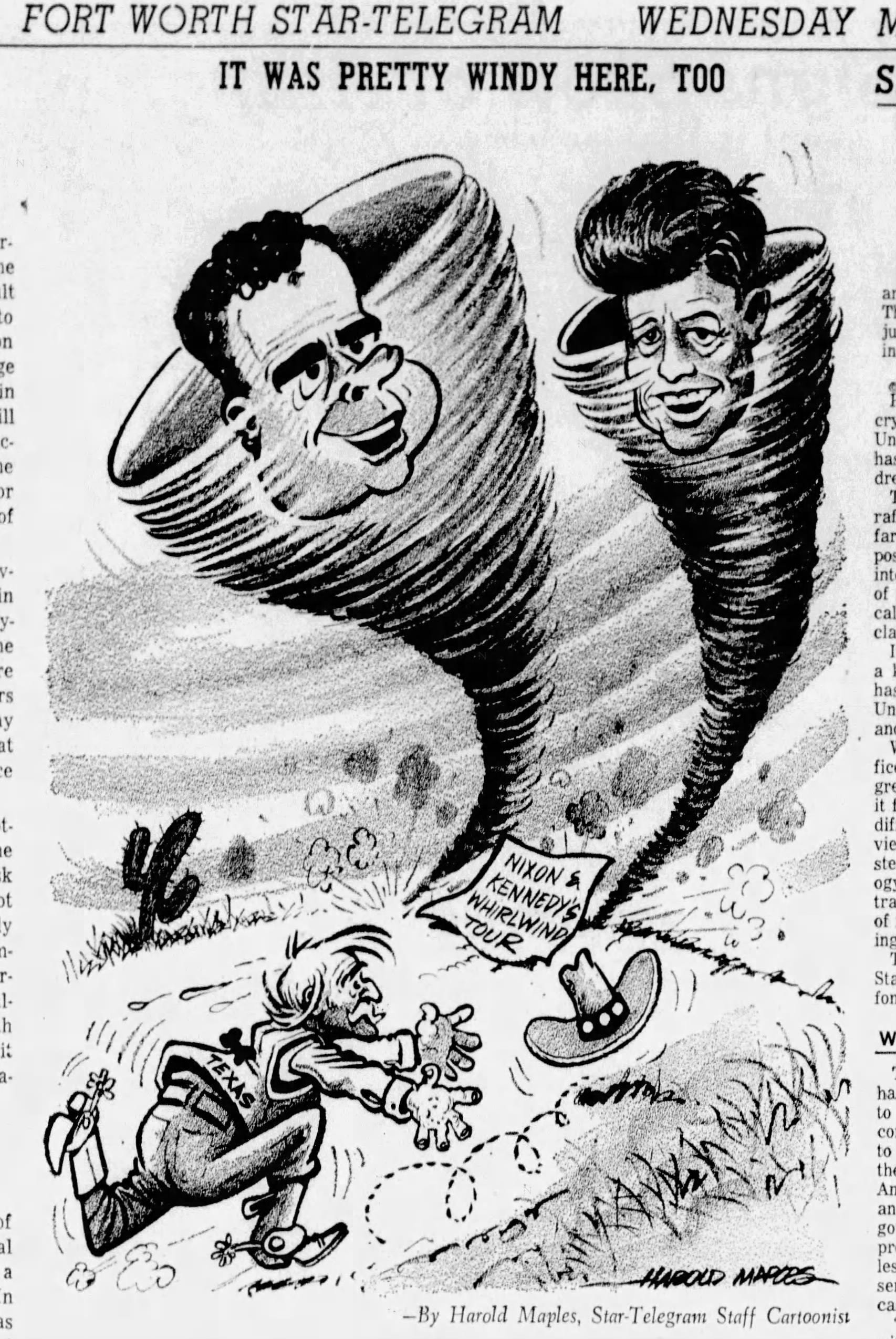
Some images from that September 14th Day. You’ll hear some of the speech at 2:30
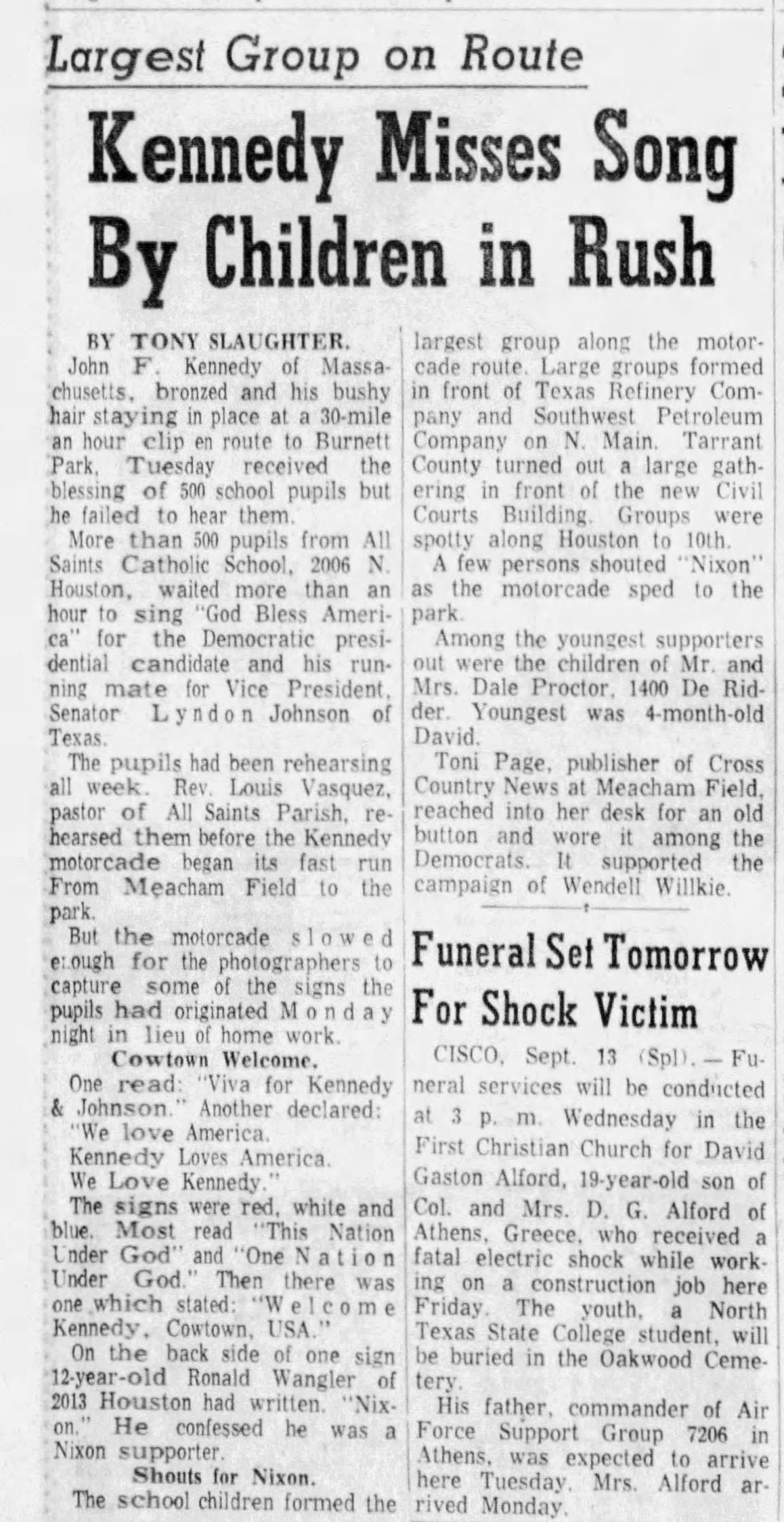
As they left, more than 500 schoolchildren waited along the route to sing “God Bless America.”
He never heard them.
The motorcade was moving too fast.
Somewhere, a group of kids stood there with a song ready, and the moment just… passed.
A woman fainted in the crowd.
An ambulance got stuck in traffic.
Two children watched the motorcade from the roof of a car.
A man proudly said he’d known Kennedy his whole life and helped raise him, which feels like the kind of thing people have always said about candidates they like.
And then there were the protesters.
In Arlington, anti-Catholic signs showed up.
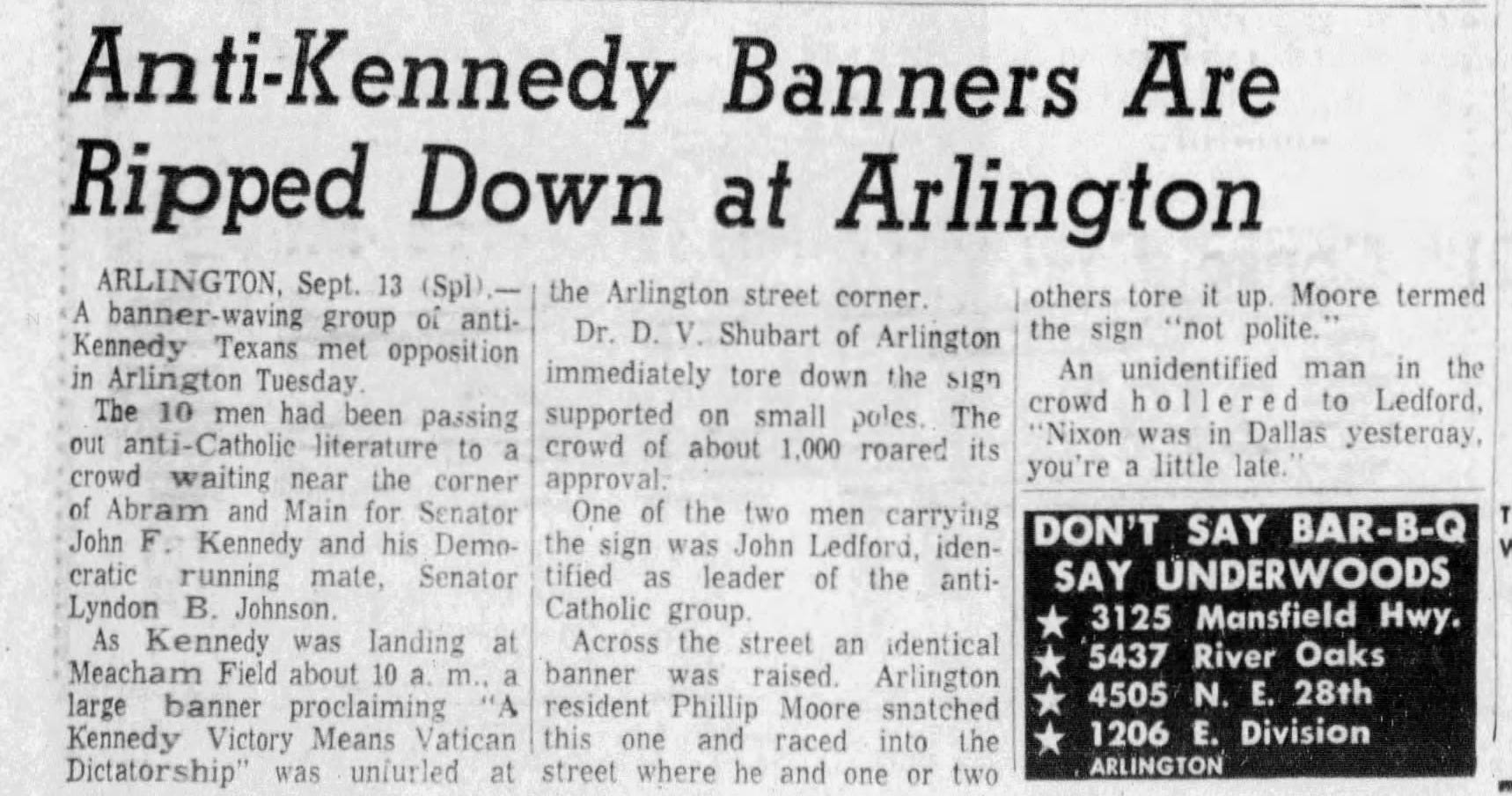
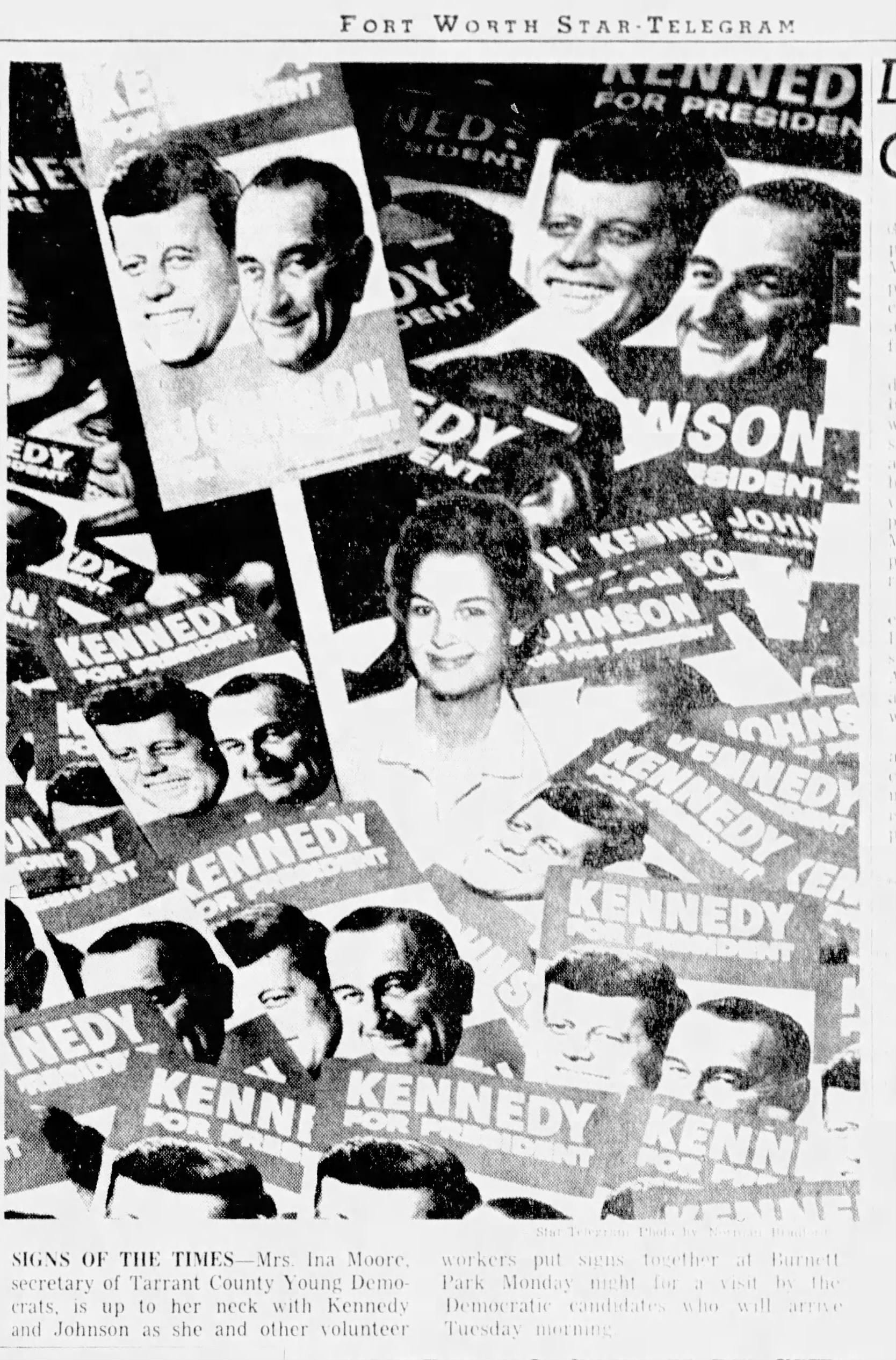
Some were torn down before Kennedy even arrived.
Somebody in the crowd yelled, “Nixon was in Dallas yesterday, you’re a little late.”
Even in 1960, nothing was clean. Nothing was simple.
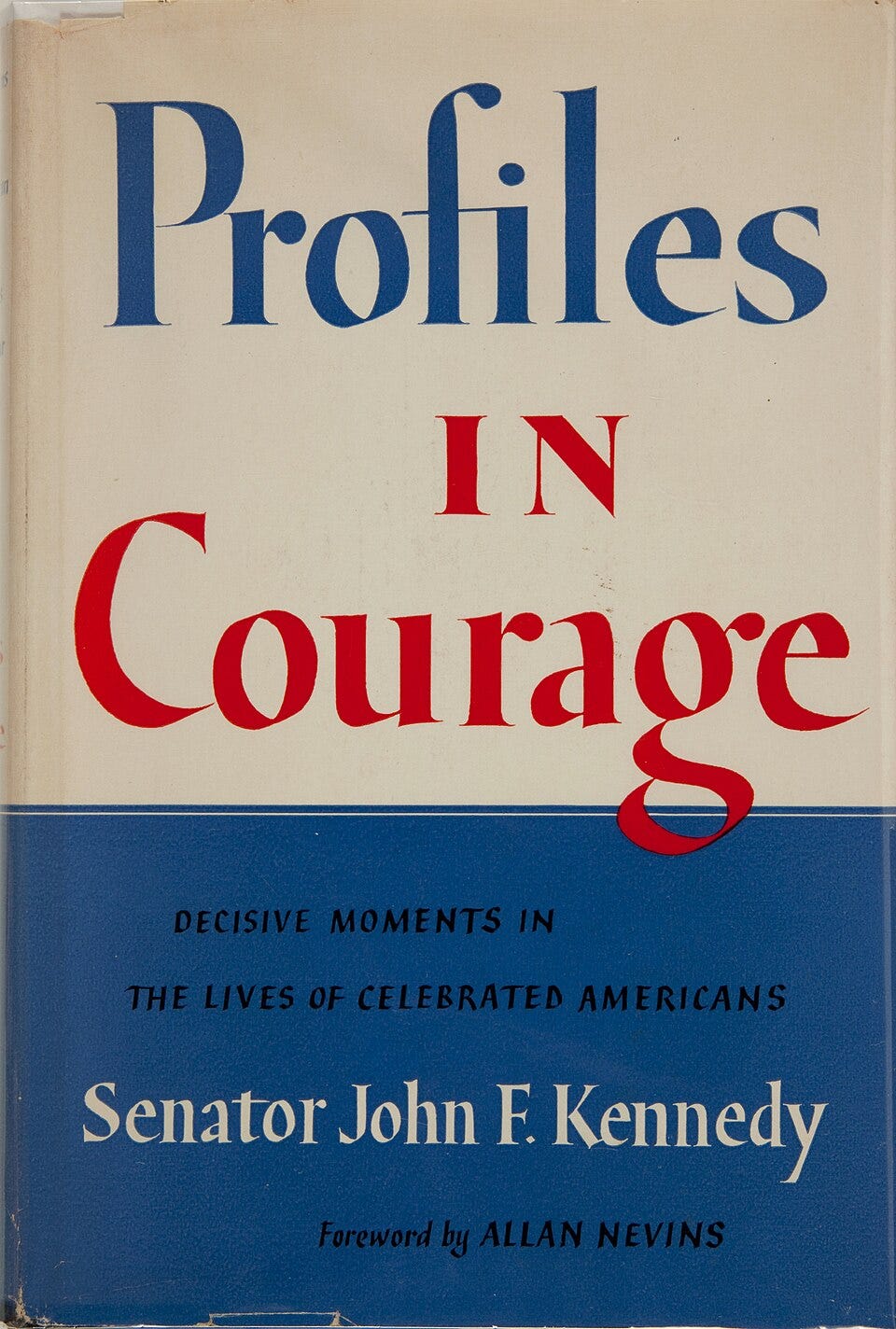
After the speech, Kennedy shook hands, signed autographs, even copies of Profiles in Courage, which is about as perfect a campaign prop as you could imagine.
Then the motorcade rolled out.
Down 7th Street. Through the canyon of downtown buildings.
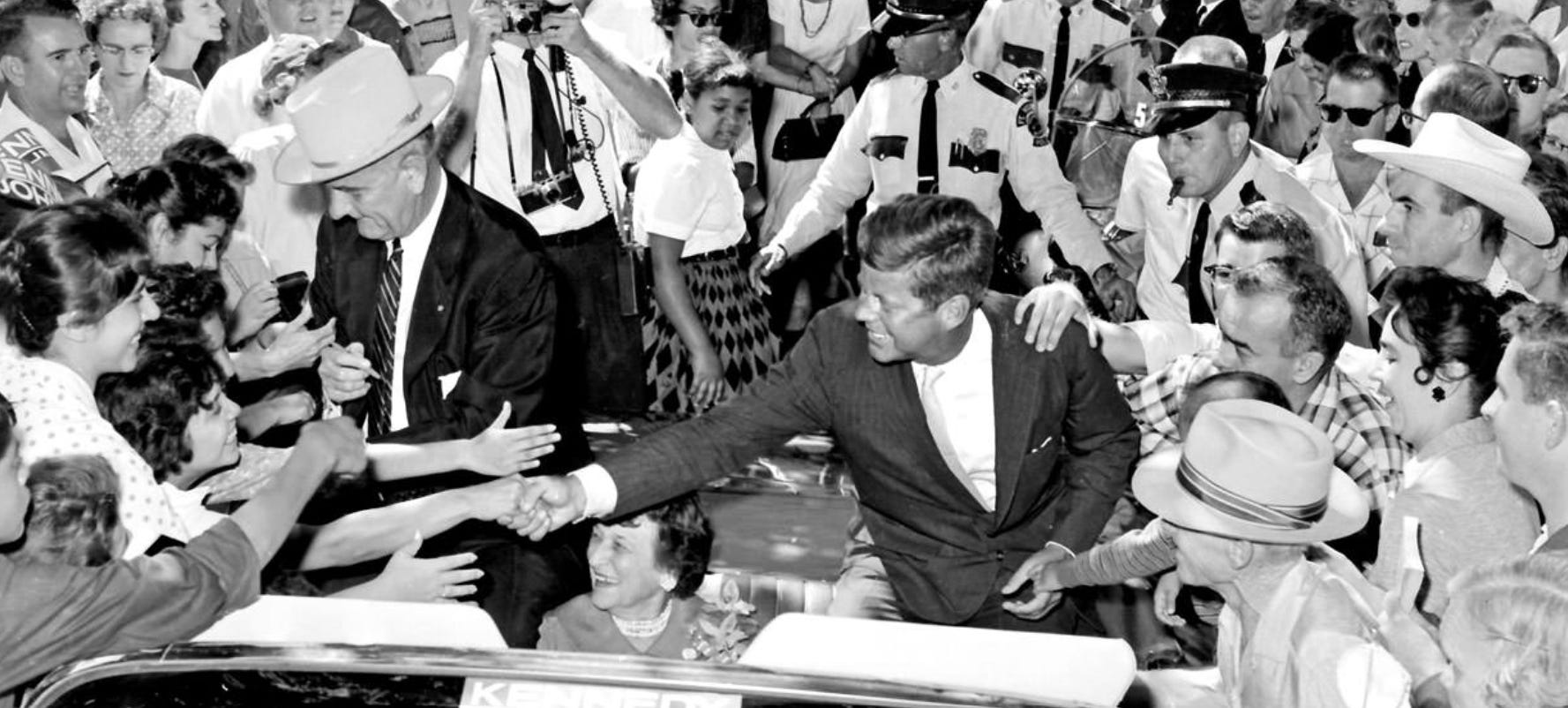
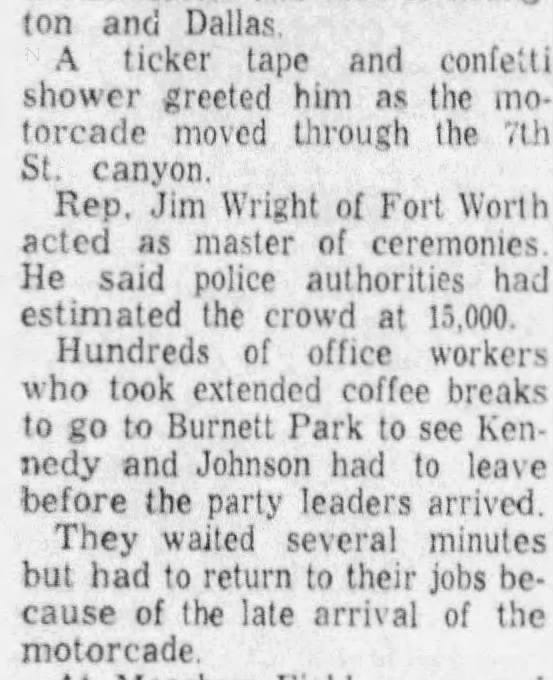
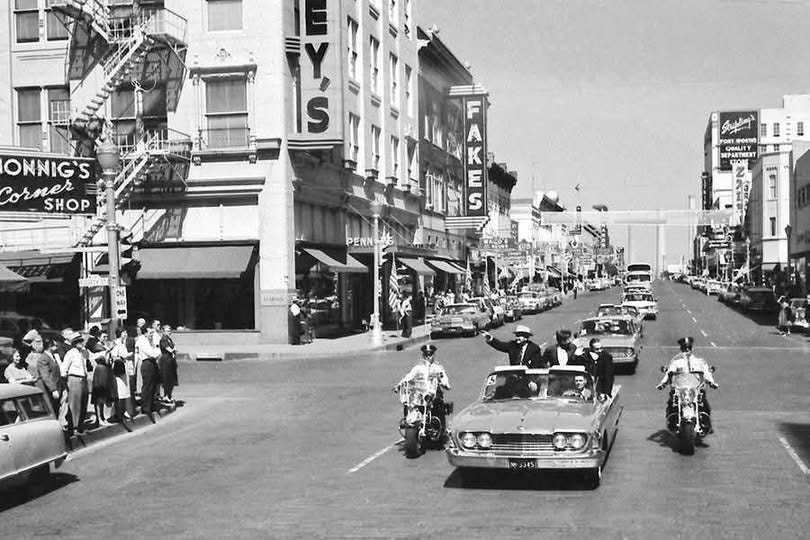
Ticker tape falling.
Fort Worth has only done that a few times in its history. It did it that day. (Also for Alan Bean and Douglas MacArthur)
And then he was gone. On to Dallas. On to the next speech. On to the next crowd.
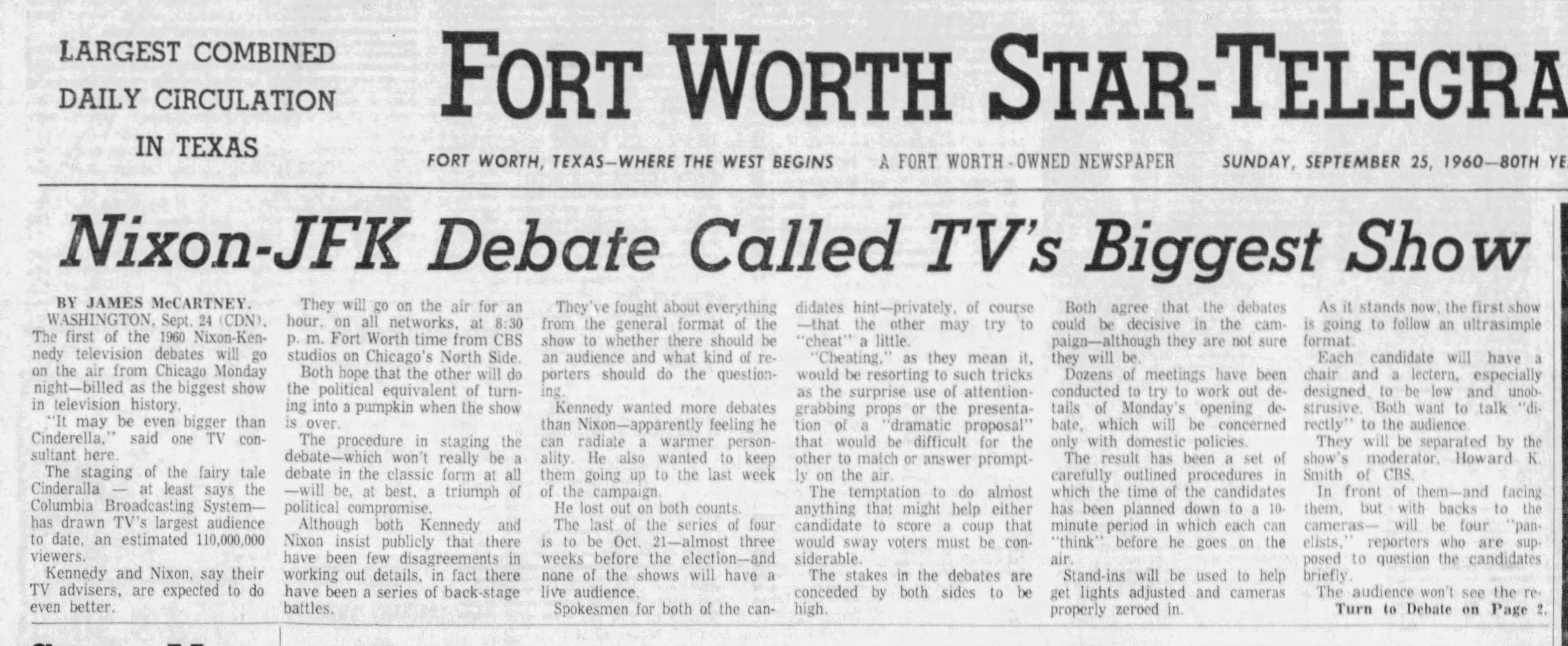
Then on September 26, 1960, about 70 million Americans tuned in for the first time a presidential debate was broadcast live on television.
John F. Kennedy and Richard Nixon stood side by side, answering questions about the Cold War, the economy, the future of the country, all the things candidates had always talked about. And if you only listened, really listened, you might have thought Nixon had the edge. He knew the issues, he had the experience, he sounded like a man who had been in the room where decisions get made. But television is not radio, and America was no longer just listening.
Because if you watched, it told a different story. Kennedy looked like the future, he had got a tan in California, and wore makeup, he looked calm and steady, speaking straight into the camera like he was talking to you and only you. Nixon looked like a man who had been through a long week, pale under the lights, a little uncomfortable, a little off. And that was the moment everything shifted. It was the night politics became something you could see as much as hear, and from then on, it wasn’t enough to be right. You had to look right too.
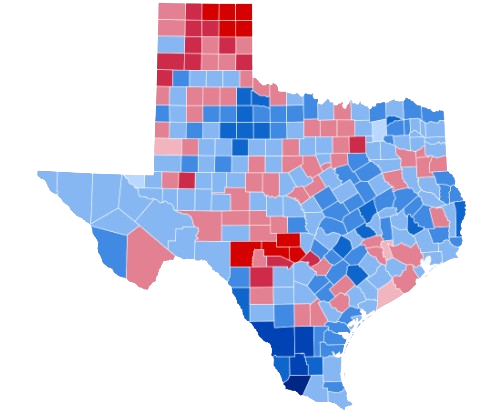
Kennedy would go on and he would win Texas that November.
Barely.
About 51 percent to 49.
But it was enough.
Without Texas, there is no President Kennedy.
Without trips like this one, standing in a park in Fort Worth, shaking hands with people who weren’t quite sure about him yet, there is no win.
And maybe that’s the part we forget.
We remember the crowds, the speeches, the debate, the way he looked on television, the way history seems to line everything up so neatly after the fact. But it wasn’t neat. It was a candidate moving too fast through a state that wasn’t sure about him, stopping in a park long enough to win over just a few more people, just enough to matter.
Because in the end, elections don’t turn on one moment. They turn on thousands of small ones. A handshake in Burnett Park. A line in Houston. A glance into a television camera. And somewhere in all of that, Texas tipped just enough.
And three years later, when he came back to Fort Worth, he didn’t need to convince anyone of anything anymore.