Before Sundance Square, There Was Cake Eaters and City X
The Gruen Plan, the dream of a car-free downtown, and the city that almost became tomorrow

I grew up in Minnesota believing in malls. I mean, the Mall of America is there.
The first fully enclosed, climate-controlled shopping mall in America was Southdale Center in Edina, Minnesota.
Edina, bunch of Cake Eaters. If you grew up anywhere else in Minnesota, you knew that phrase before you knew what it meant. If you watched the Mighty Ducks, that is who they were referring to. It was less insult than mythology. Edina was polished. Edina was orderly. Edina was where things worked the way they were supposed to. And at the center of it was Southdale, a place where winter could not reach you and time slowed down just enough for people to sit, and talk, and exist.
Southdale was designed by Victor Gruen.
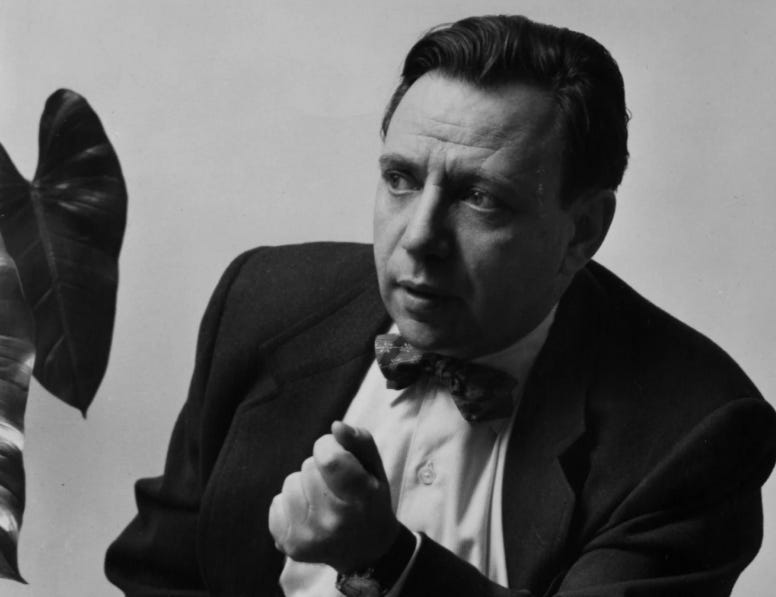
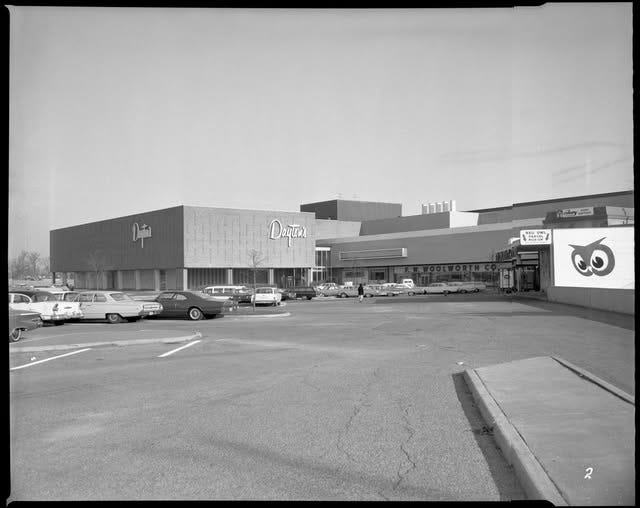
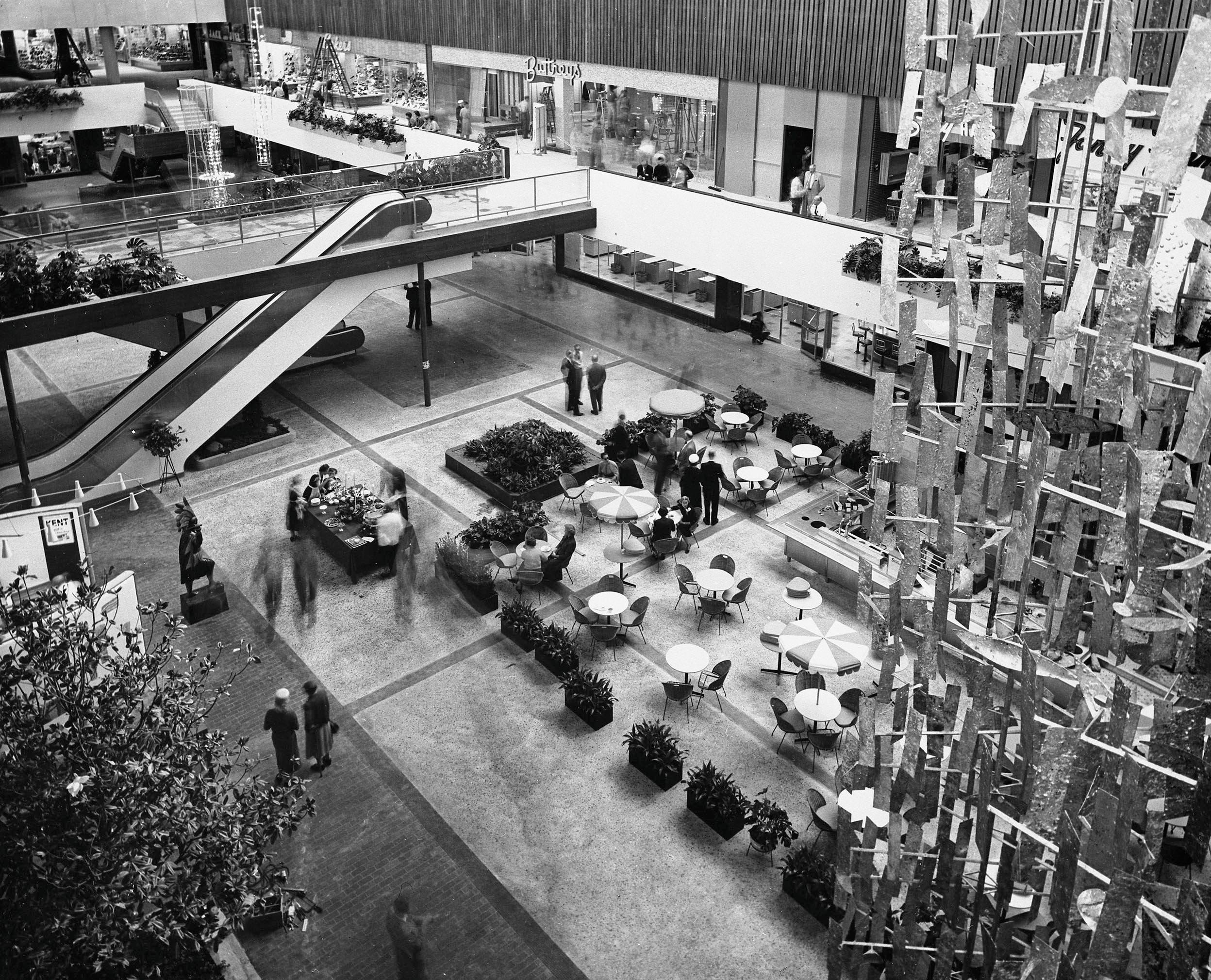
At the time, that was just a name. Later, you realized it was the name of a man who believed cities could be saved. He did not invent malls because he loved shopping. He invented them because he loved people, and he believed people needed places to gather. He believed people needed places where they could sit and talk and exist without being pushed aside.
Which is how Victor Gruen came to Fort Worth with a secret.
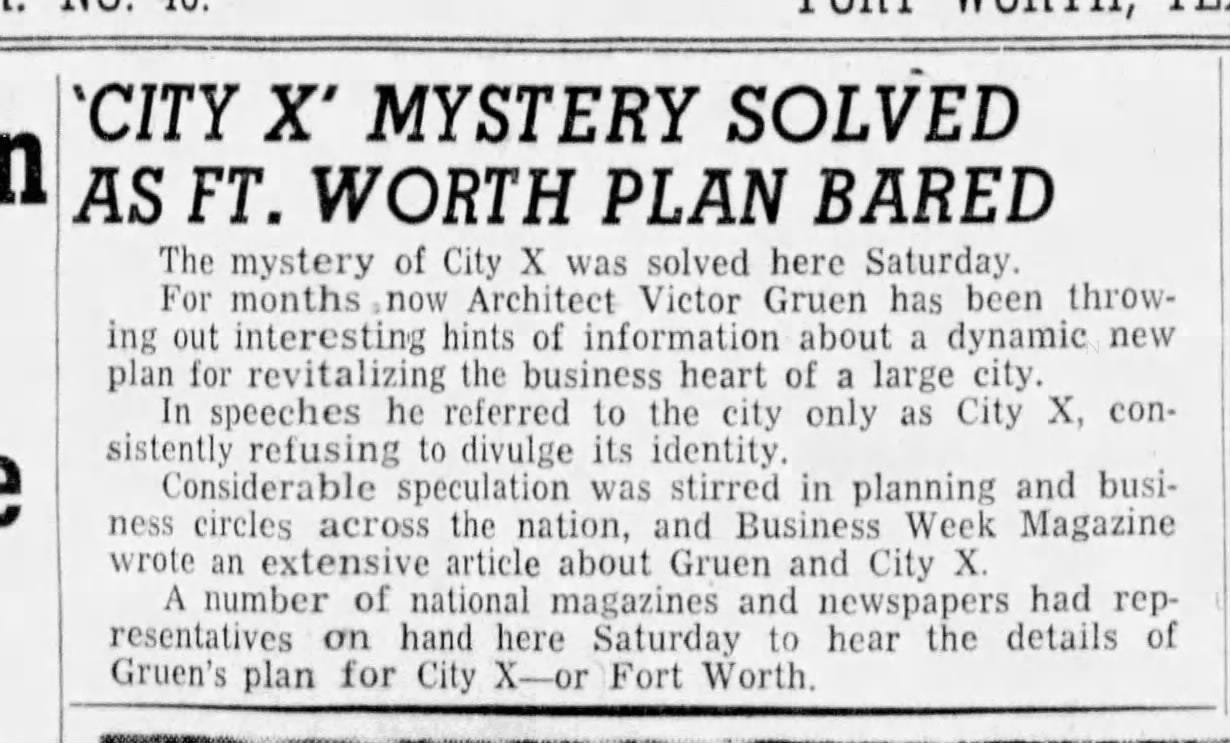
For months, he spoke about a place he called City X. He dropped hints in speeches and interviews, describing a bold plan to rescue a downtown and return it to life. The Fort Worth Star-Telegram wrote that “in speeches he referred to the city only as City X, consistently refusing to divulge its identity.” Business Week speculated. Planners wondered. Cities hoped.
Then, in March of 1956, Gruen revealed the truth.
City X was Fort Worth.
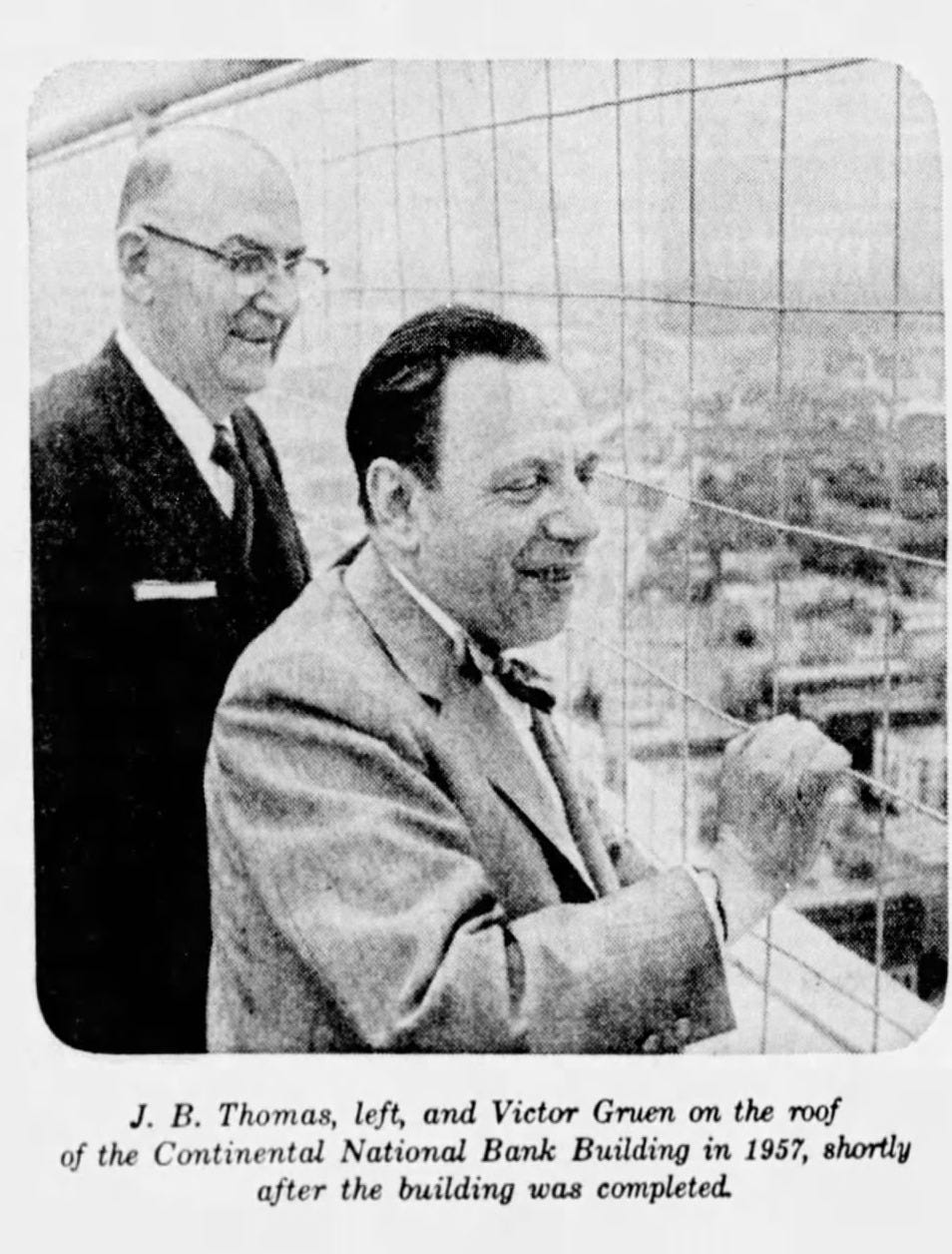
The man who made it happen was J. B. Thomas, (not to be confused with the singer of Raindrops Keep Fallin' on My Head and the Growing Pains theme song, B.J. Thomas) but the president of Texas Electric Service Company. Thomas was trying to understand the future of electricity demand, but he understood that electricity followed people, and people followed cities that worked. He hired Gruen to design a long-range plan for downtown Fort Worth. Thomas believed in it immediately. “I like the plan,” he said, “because to the best of my knowledge and belief it is within the financial ability and resources of our city and people if due regard is had for the timing of the various steps.”
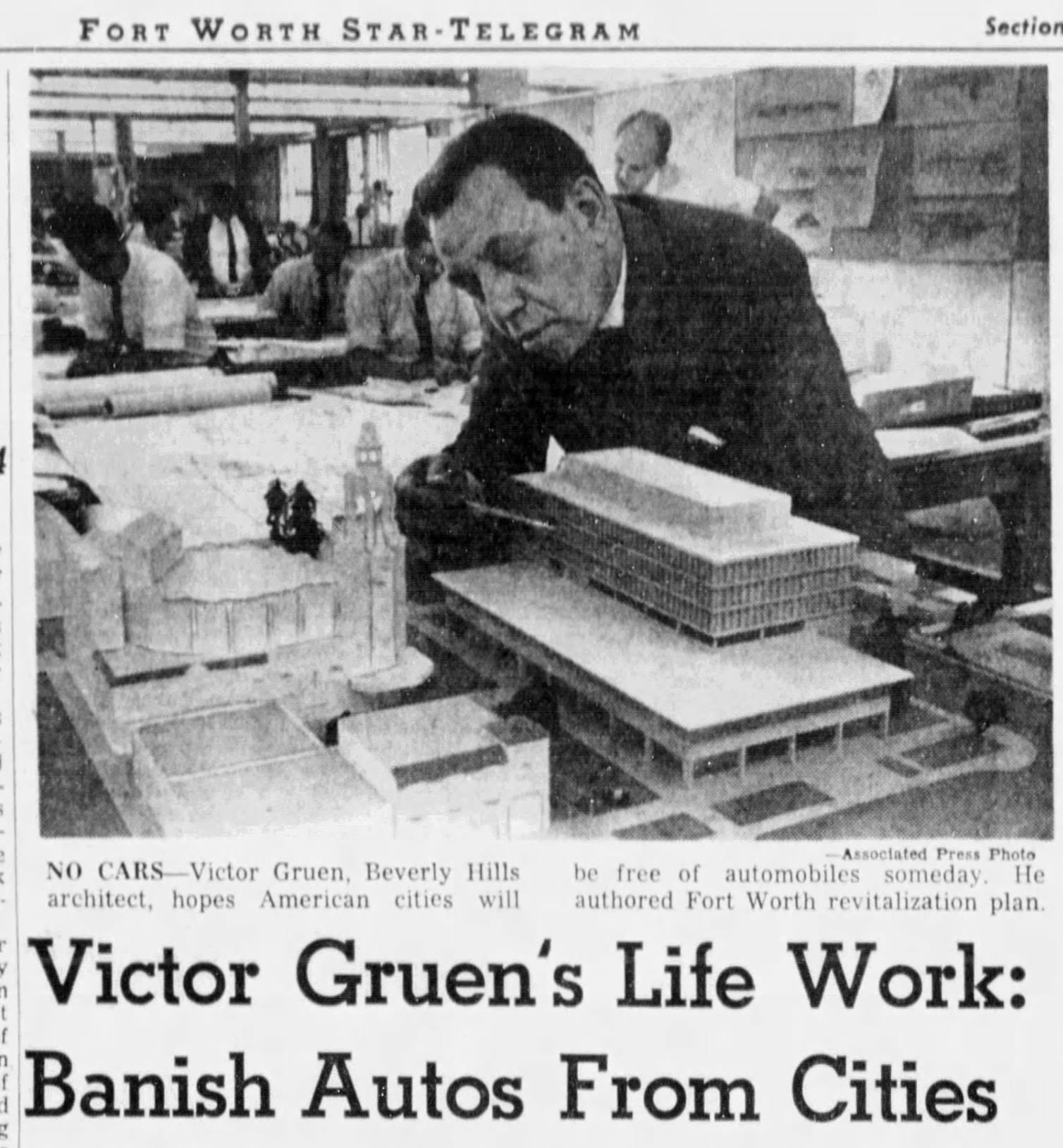
Thomas had not just hired an architect. He had hired a man who believed cities were living things.
Gruen once said, “The city is a living organism which is dying from deadly foreign particles injected into its veins and arteries.” Those particles, he said, were automobiles. He called them “space-eating monsters from Detroit.”
That was not exaggeration. That was diagnosis.
Fort Worth’s civic leaders quickly understood what Gruen was offering. W. B. Leonard, president of the Fort Worth Chamber of Commerce, said, “You can’t project the future without a well devised plan.” He understood the cost would be significant, but he also understood the cost of doing nothing would be greater.
J. Marvin Leonard, president of Leonard Brothers, saw the opportunity clearly. He called the Gruen Plan “one of the most terrific things that has ever happened for Fort Worth.”
Milton B. Amstater, president of Neiman Marcus, had already seen Gruen’s work up close. “He is display business in his field,” Amstater said. “The plan is excellent.”
Even City Councilman Barney Holland Jr. recognized what it meant. “It is so good to throw the leadership of Fort Worth into very bold relief,” he said.
These were not dreamers. These were businessmen. Bankers. Builders. They understood reality. And they believed Victor Gruen was offering Fort Worth something real.
Gruen’s plan began with an uncomfortable truth. Downtown Fort Worth was suffocating. Traffic had taken over. Streets that once belonged to people now belonged to machines. Downtown was losing its reason to exist.
Gruen believed the solution was radical but human.
He would remove cars from downtown.
His plan called for a super freeway loop around the city center. Six massive parking terminals would be built along that loop, holding 60,000 cars. Drivers would park at the edges and walk into downtown.
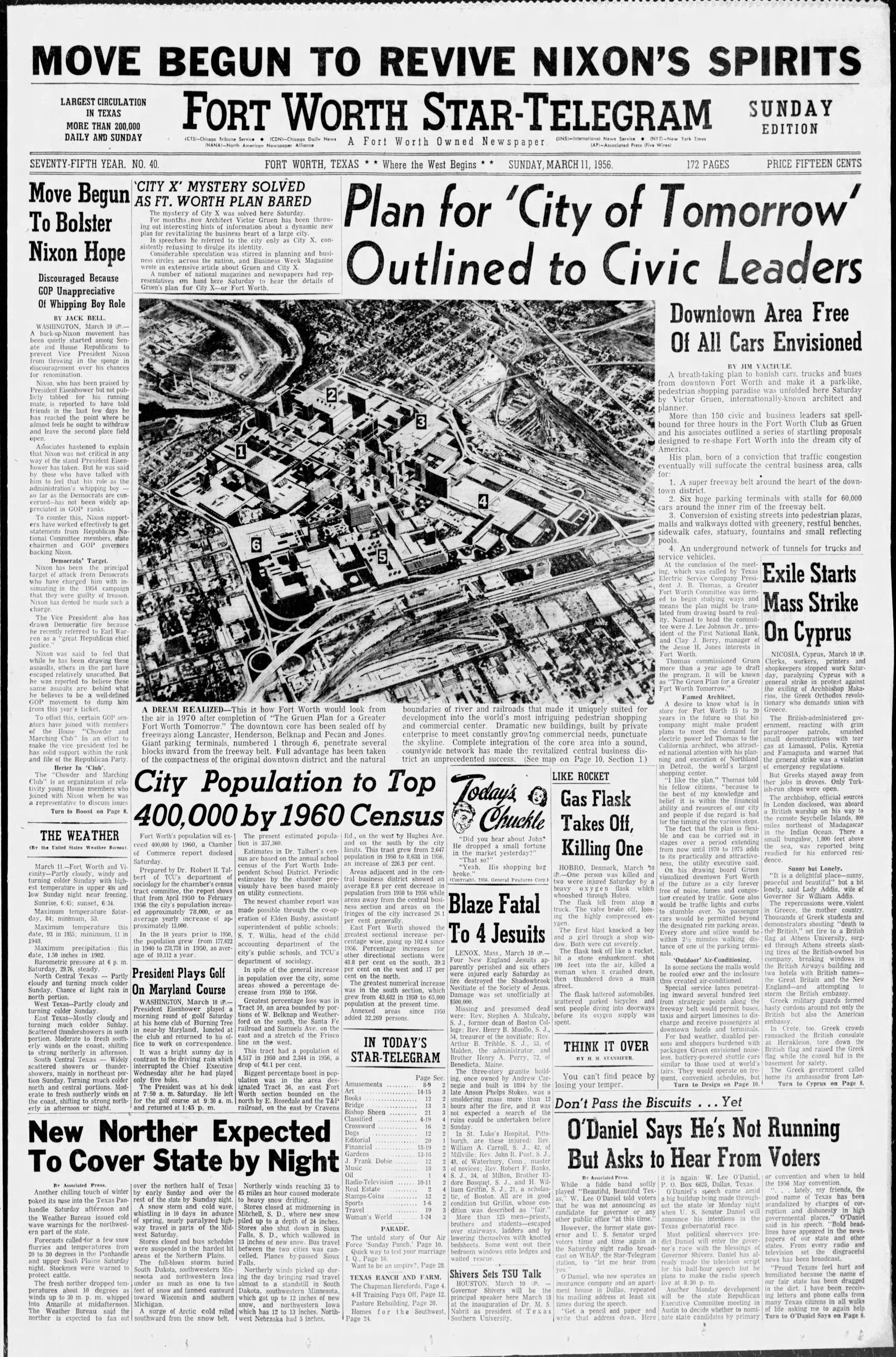
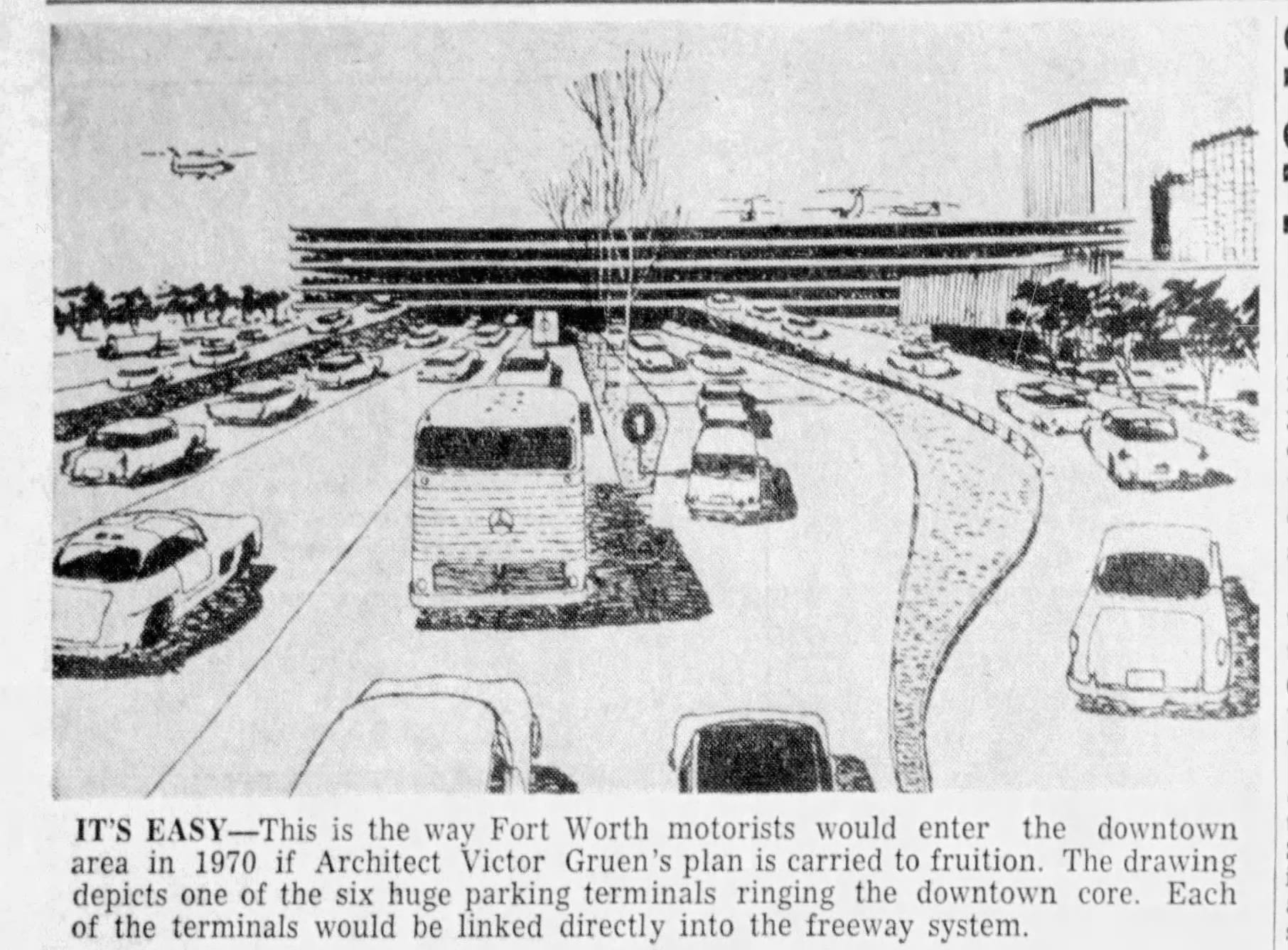
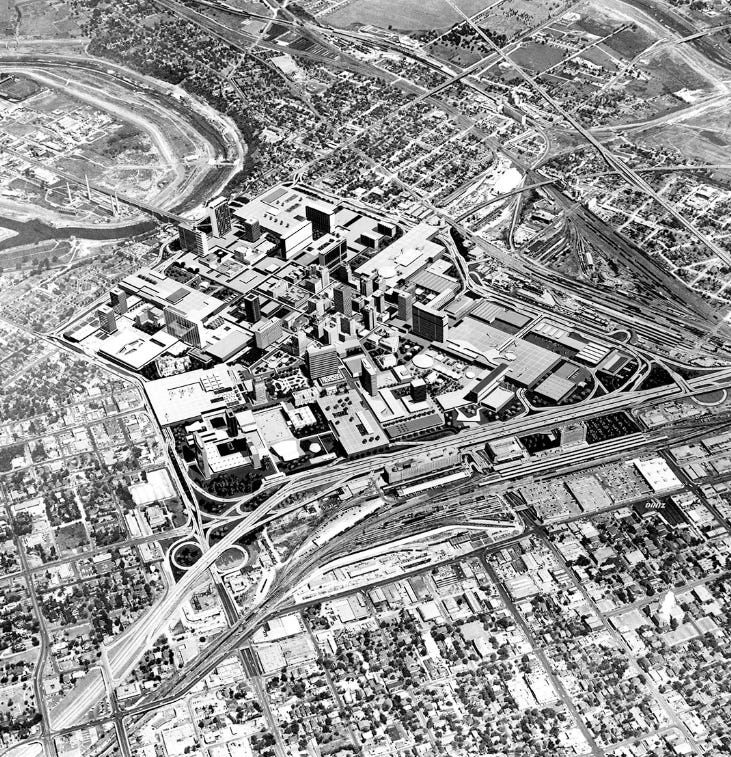
Below ground, trucks and deliveries would move through tunnels. Above ground, downtown would belong to people again.
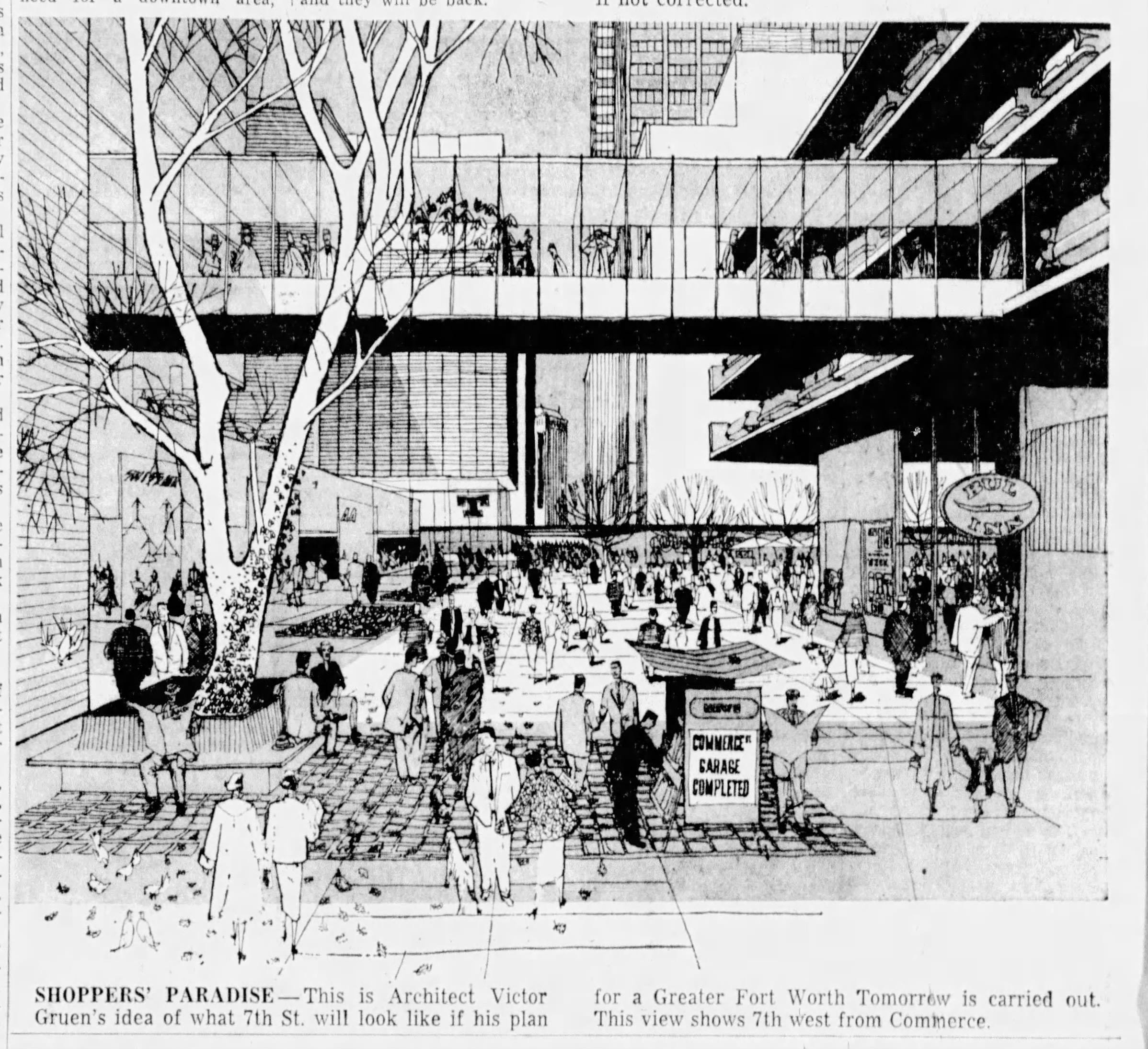
The Star-Telegram described it as “a breathtaking plan to banish cars, trucks and buses from downtown Fort Worth and make it a park-like, pedestrian shopping paradise.”
Gruen imagined walkways filled with “greenery, restful benches, sidewalk cafes, statuary, fountains and small reflecting pools.” He envisioned downtown as “a city forever free of noise, fumes and congestion created by traffic.”
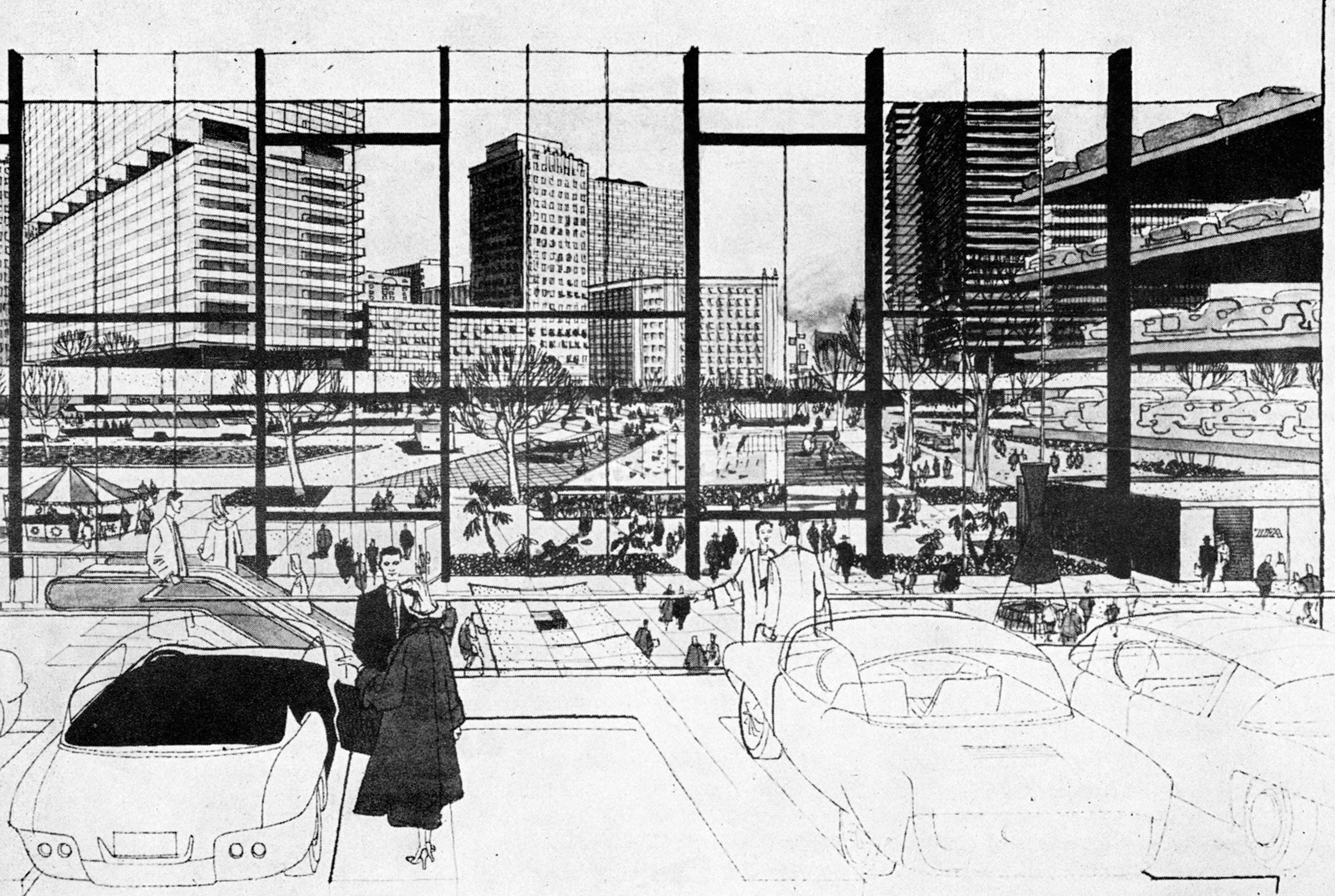
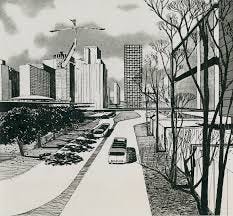
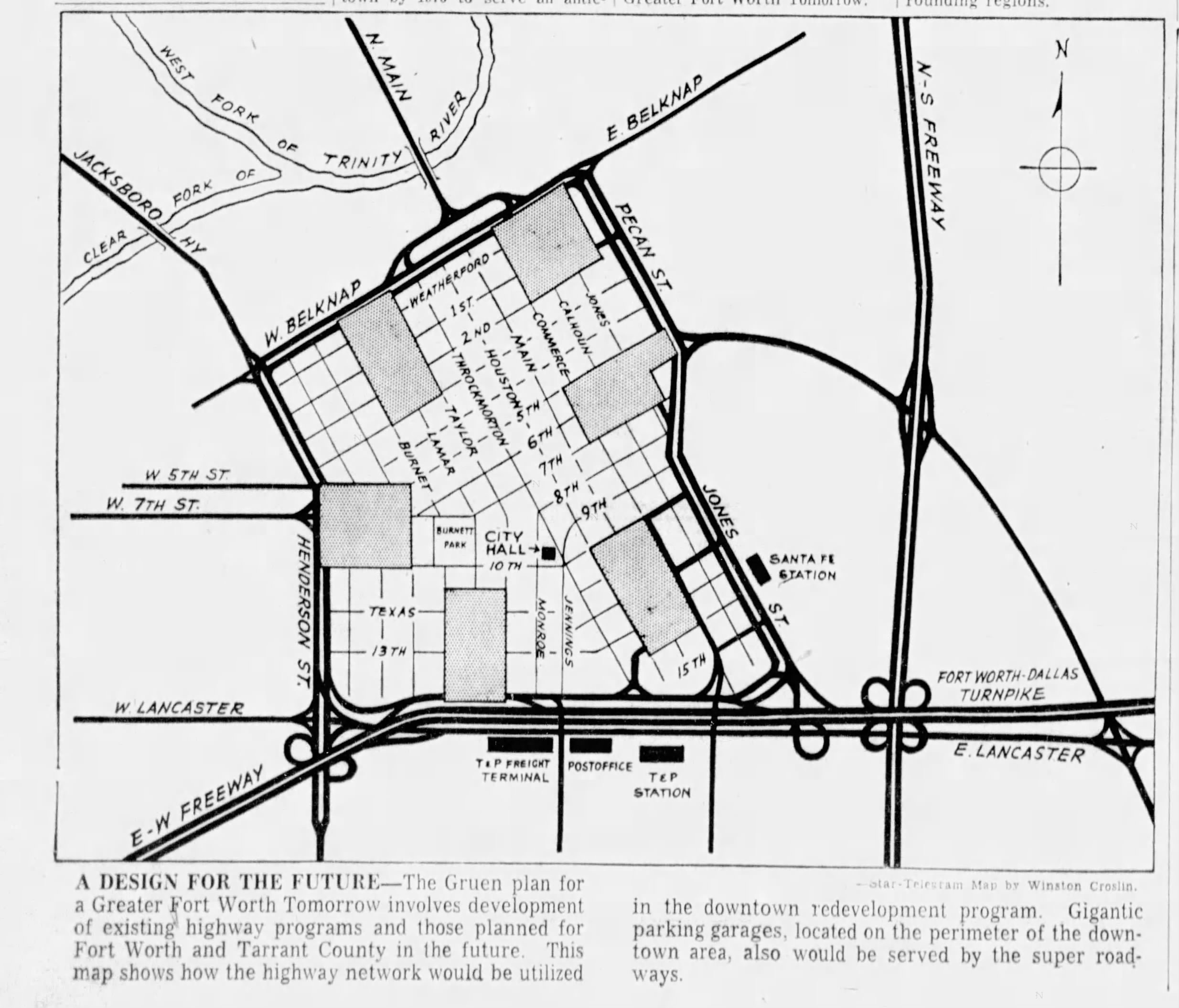
He even imagined what the newspaper called “outdoor air-conditioning.” Covered pedestrian walkways would provide shade and comfort in the Texas heat. Battery-powered shuttle cars would help people move through downtown easily. Every office and store would be within two and a half minutes of parking.
He believed downtown should belong to people again.
He believed cities existed for what he called human communication.
He believed people needed benches.
The cost frightened people. One headline admitted plainly, “Cost Not Yet Calculated in Gruen Plan.” Public funds would help finance freeways, tunnels, and parking structures. Private investment would build the stores and offices that would bring downtown back to life.
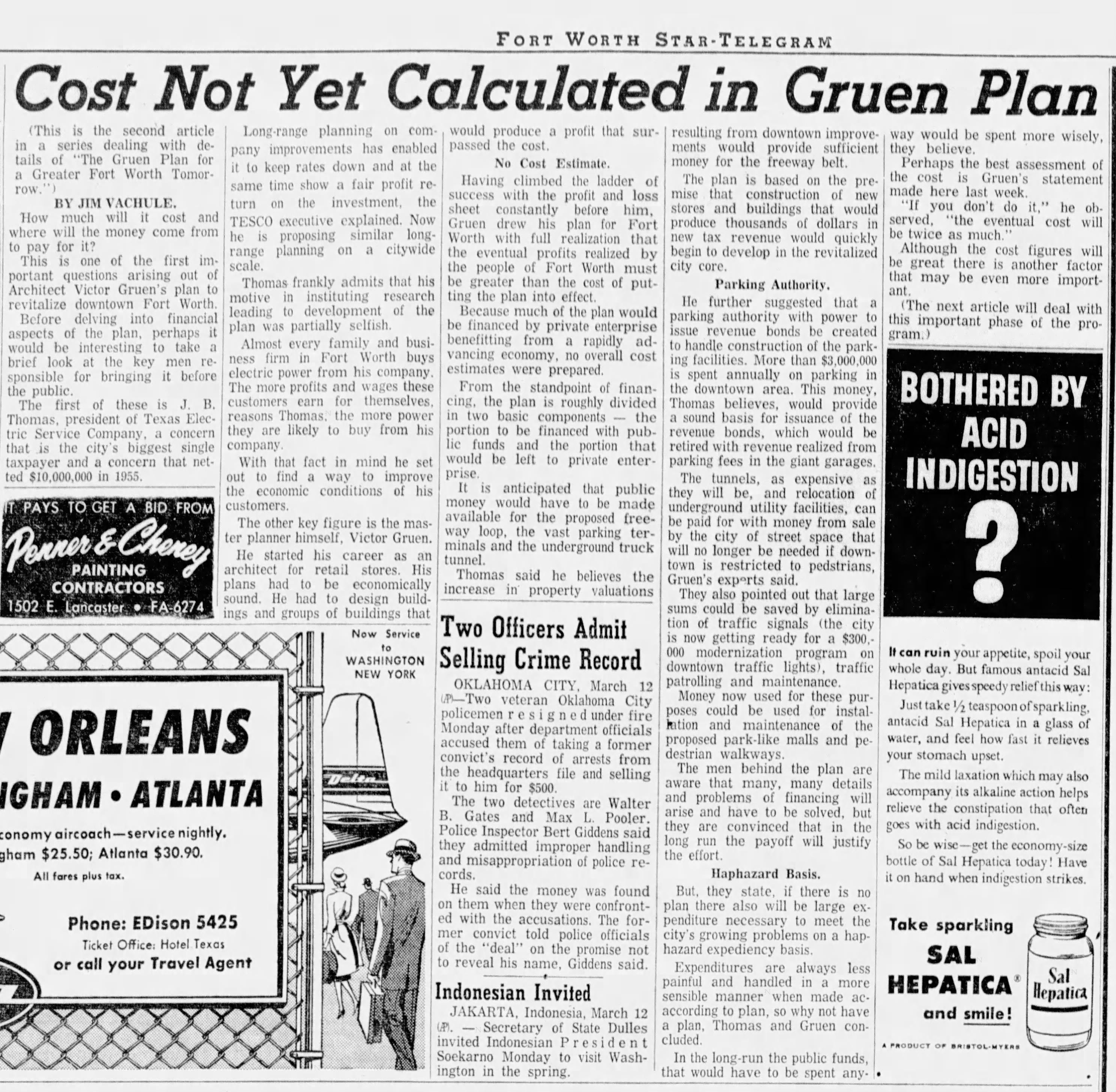
Gruen did not deny the uncertainty. But he understood something about time.
“If you don’t do it,” he warned, “the eventual cost will be twice as much.”
He knew cities that waited too long lost something they could not easily recover.
More than 150 civic and business leaders gathered at the Fort Worth Club to hear Gruen explain his vision. They studied models and drawings. They saw downtown Fort Worth as it might become.
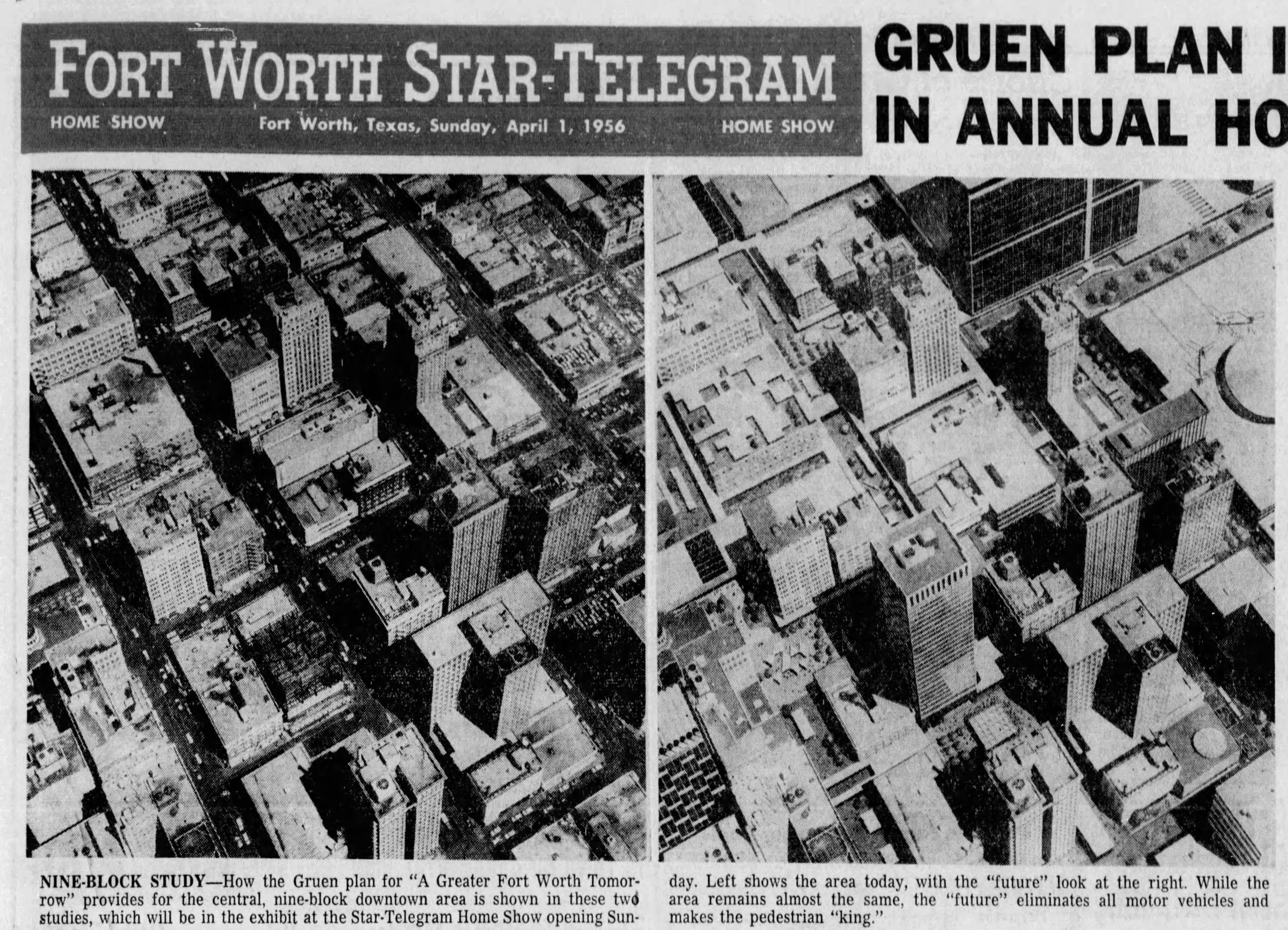
And for a moment, Fort Worth stood at the edge of tomorrow.
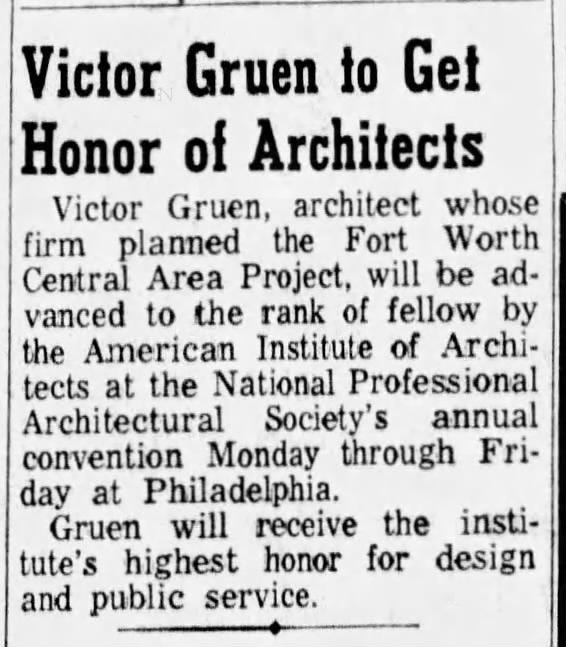
Gruen himself became internationally famous. His firm planned major urban projects across the United States. In 1961, he was elevated to Fellow of the American Institute of Architects and received the institute’s highest honor for design and public service. He had arrived in America in 1938 from Vienna with eight dollars and a set of drafting tools. He built a career designing shopping centers, but he never stopped believing his true work was saving cities.
He once said, “Some say there is no need for a city, a center. They say you can communicate in the future with television phones. You may be able eventually to talk to your girlfriend by television, but you can’t kiss her that way.”
He understood something technology never replaces.
Presence matters.
Fort Worth never fully built Gruen’s plan. It was shelved just two years after it was proposed. Economic realities intervened. Political will faded. The tunnels were never fully constructed. Cars were never fully banished.
But the plan never disappeared.
In 1978, the Star-Telegram wrote that the Gruen Plan was “never implemented, but not forgotten.” J. B. Thomas, who had commissioned the plan, rarely spoke about it. But its ideas endured. Gruen had advocated for a pedestrian downtown, underground delivery systems, freeway loops, and tree-lined public spaces. Many of those ideas would later appear in cities across America.
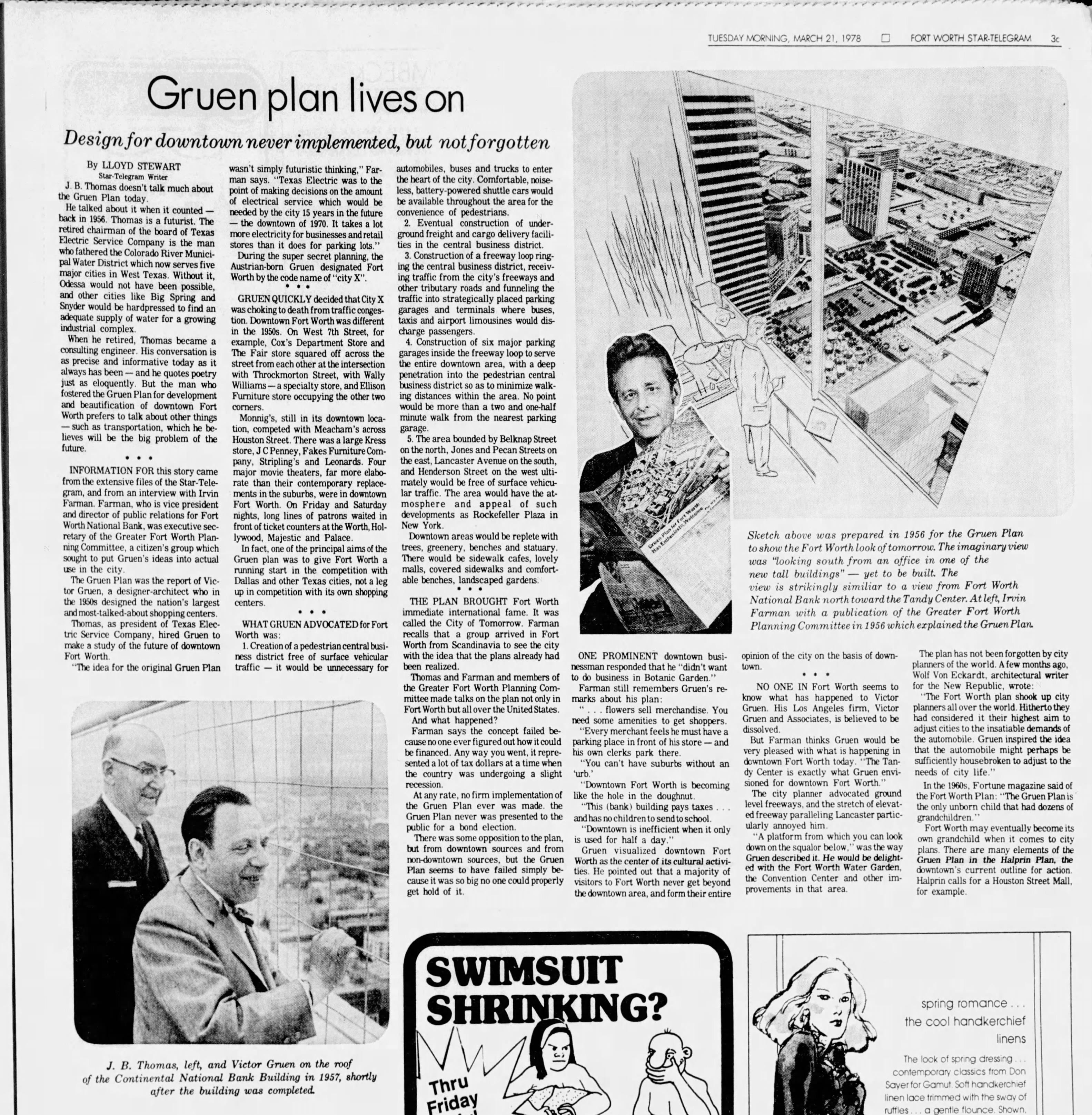
Fort Worth itself would eventually revive downtown through Sundance Square and other pedestrian-friendly developments. Gruen’s fingerprints remained, even when his blueprint did not.
Urban planners came to understand something profound about Gruen’s vision. As one observer wrote, “The Gruen Plan is the only unborn child that has dozens of grandchildren.” Now, that my friends, is a quote.
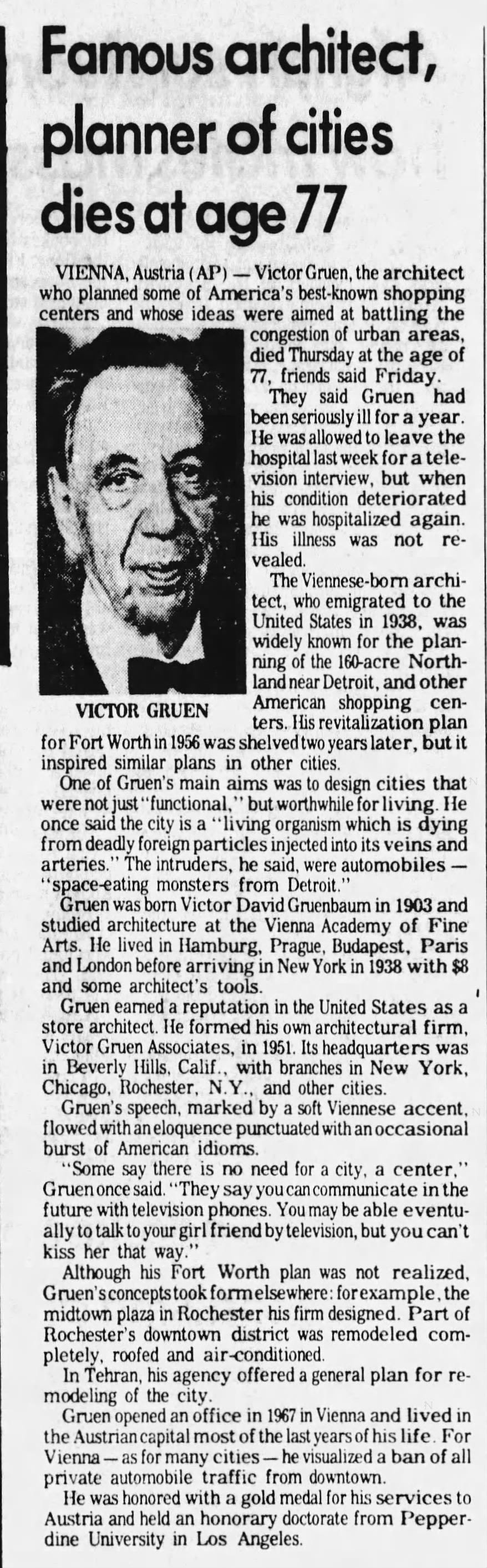
Victor Gruen died in 1980 at the age of 77. He had spent his life trying to protect cities from disappearing. He believed cities were worth saving. He believed cities were worth fighting for.
He believed cities were living things.
He believed people needed places to gather, places to walk, places to sit.
Places with benches.
Somewhere between Southdale Center in Minnesota and Sundance Square in Fort Worth, Victor Gruen left behind something permanent. Not a building. Not a tunnel. Not a freeway.
An idea.
That cities belong to people.
And if you give people trees, and benches, and places to be together, they will come back.
They always do.