Reasonable Doubt on Stonegate Boulevard
Inside the Cullen Davis murders and the trials that split Fort Worth in two.

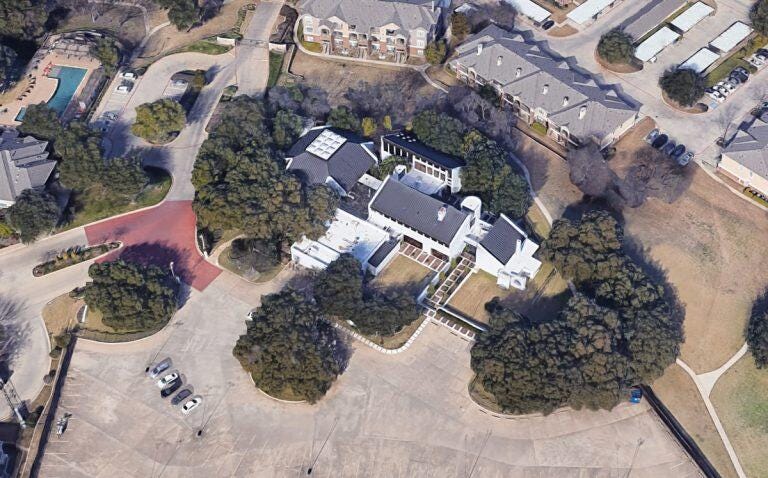
Back in college, I was dating a girl who lived in The Club at Stonegate Apartments, just below the hill near Texas Christian University. From her balcony you could see downtown Fort Worth stretch out in one direction, tall and glass, and in the other direction, rising above the trees, was this enormous modern mansion.
It didn’t look like it belonged to Fort Worth. It looked like it belonged to a movie.
At the time, I just thought it was rich-people rich.
I didn’t know it had once been the center of a storm that shook Texas the way the O.J. Simpson case would shake America nearly twenty years later.
I didn’t know it was built by T. Cullen Davis.
And I definitely didn’t know what had happened inside.
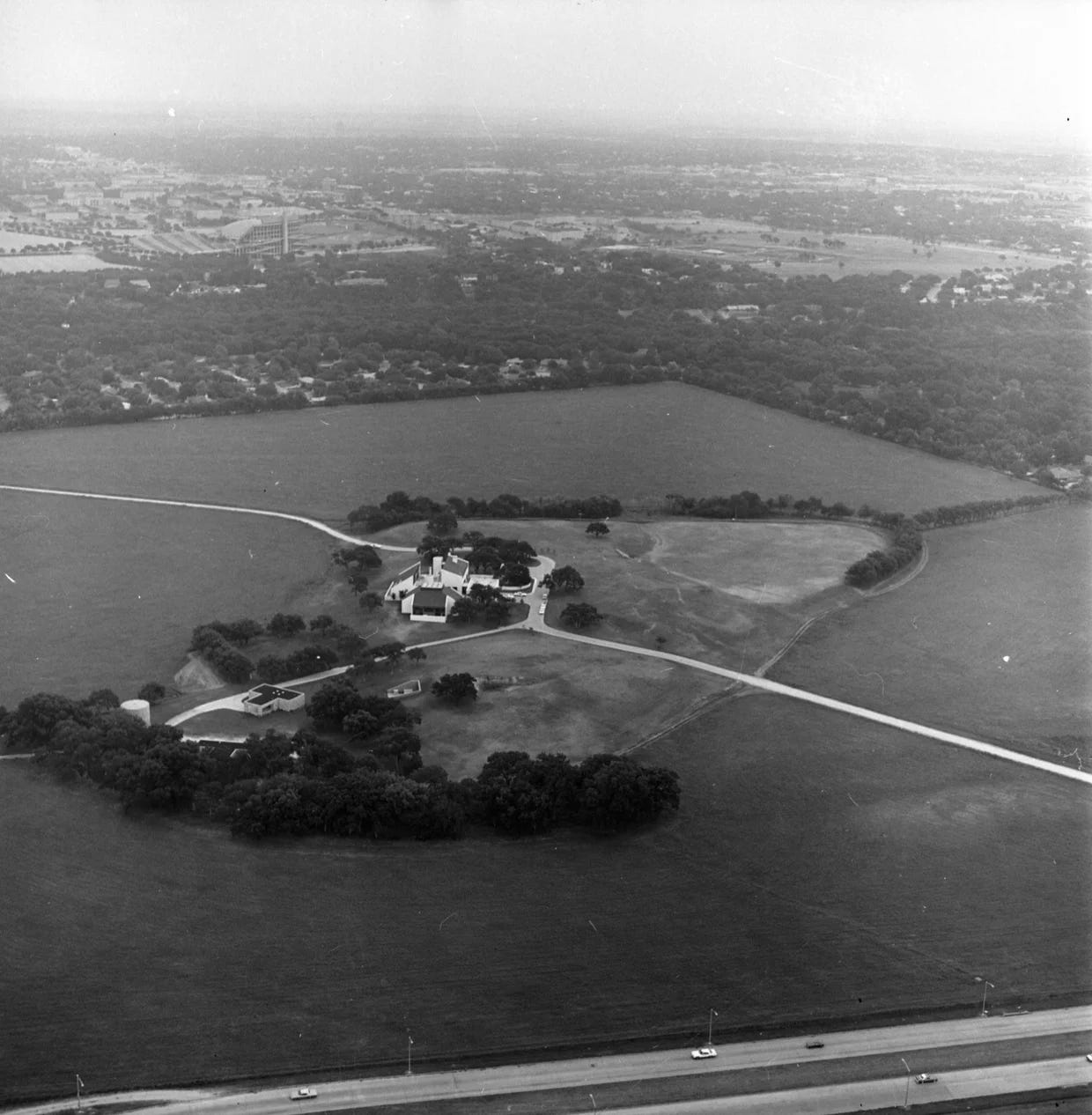
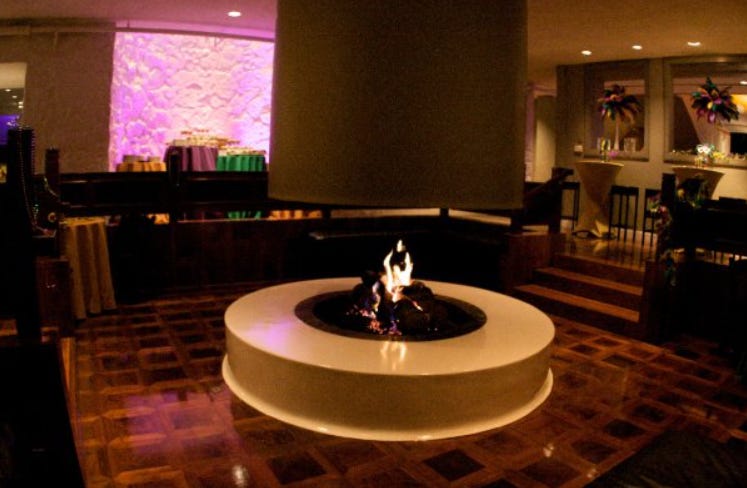
Of course, this story starts with the mansion had been built in 1972 at a cost of $6 million, an astonishing number then, about $45 million in today’s money.
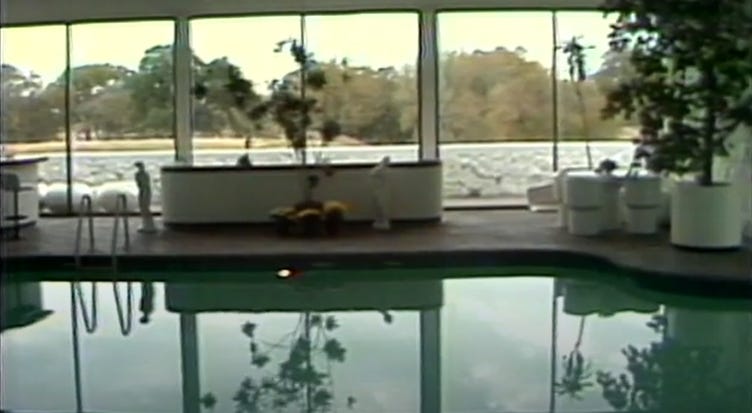
Eleven bathrooms. An indoor pool that shimmered under recessed lighting. Courtyards. Balconies. Long hallways. Even tunnels. More than 100 oil paintings hung on the walls.
It wasn’t just a house. It was oil-boom confidence poured into concrete and glass.
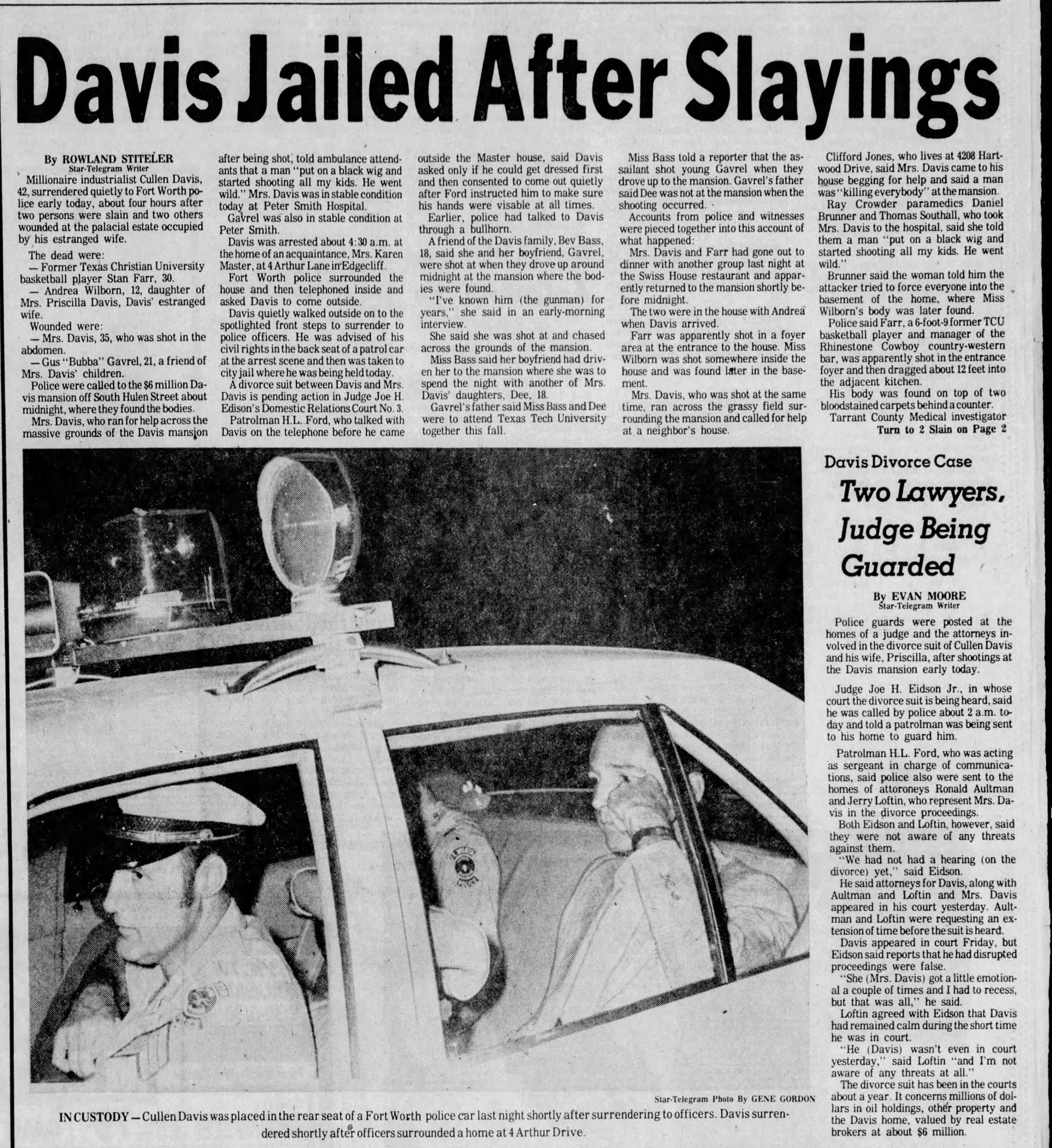
By 1976, the marriage inside that house had fractured. Cullen and Priscilla were locked in a public divorce battle. A judge had ordered Davis to pay $33 million, one of the largest divorce awards in Texas history at the time.
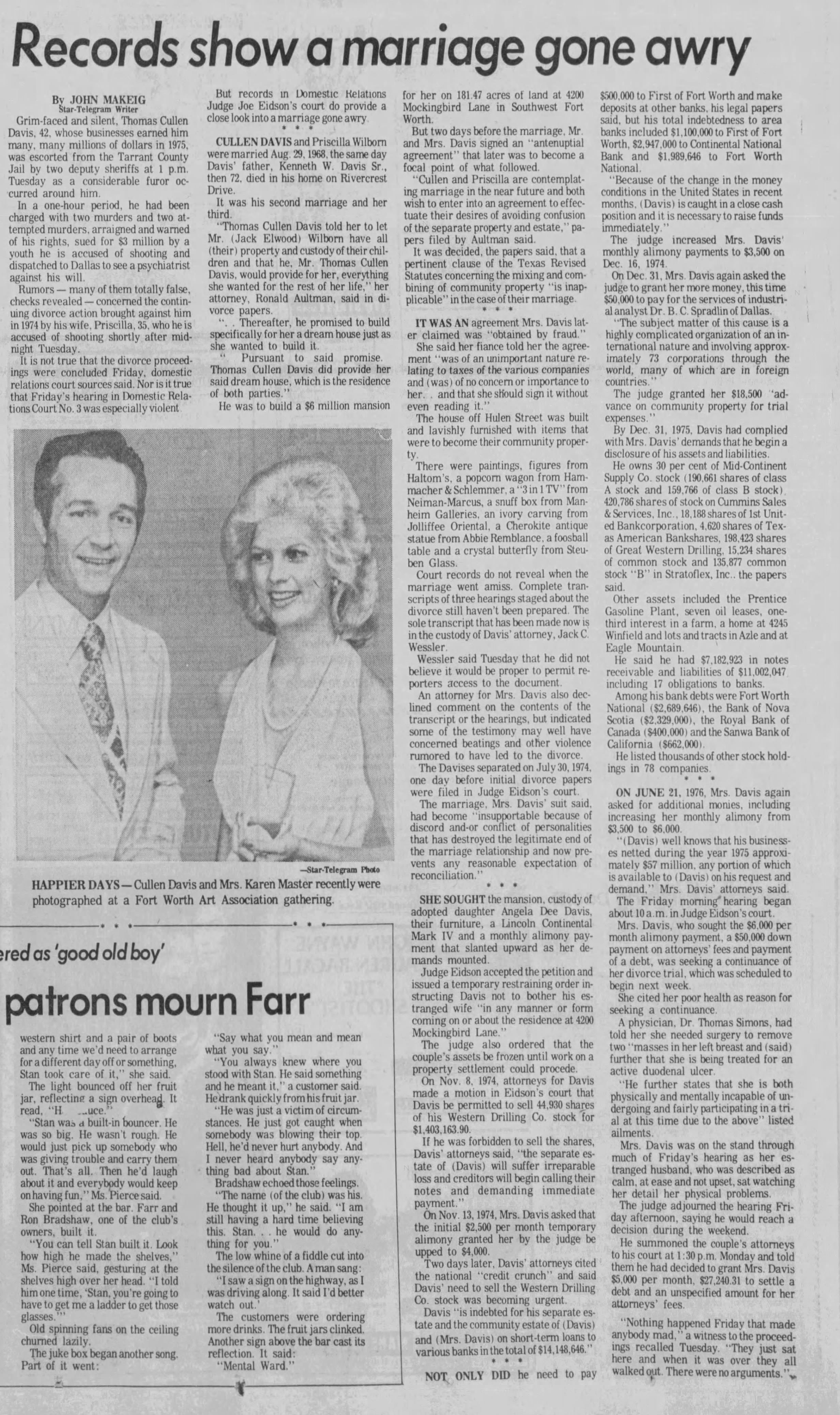
On August 2, 1976, Priscilla returned to the mansion to retrieve personal belongings.
She brought her daughter, Andrea Wilborn.
Stan Farr was there.
Gus “Bubba” Gavrel Jr. was there. He was dropping of his girlfriend, Beverley Bass, who was going to spend time with Priscilla.
No one expected gunfire.
Sometime after 10 p.m., a figure dressed entirely in black appeared inside the mansion. Black clothing. Black gloves. A black wig.
The shooter moved with purpose.
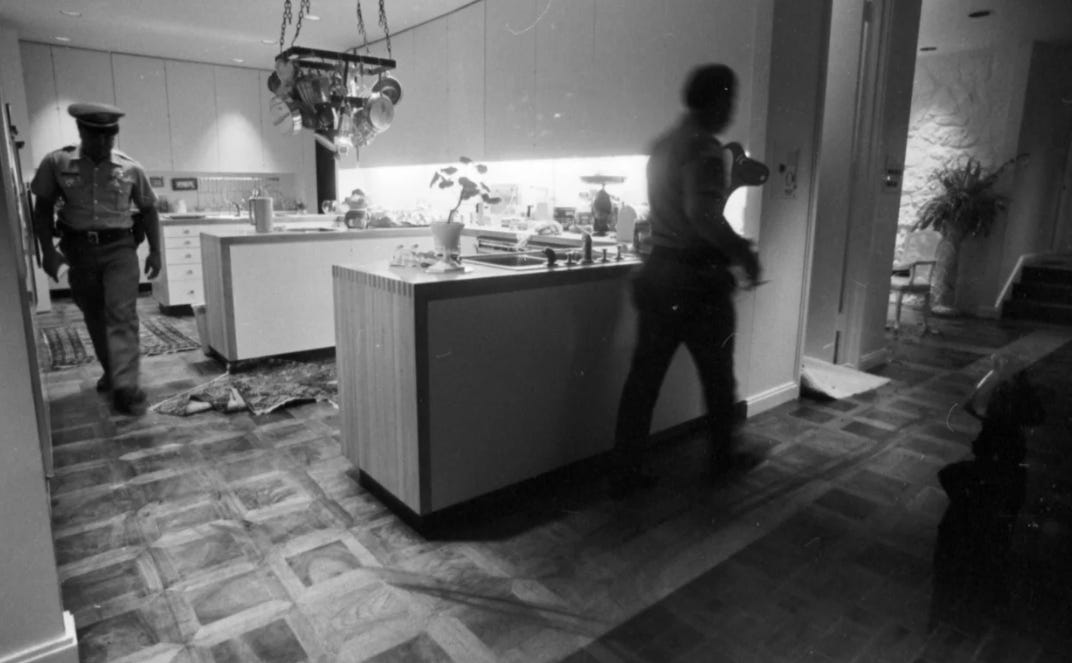
In the kitchen, Stan Farr was shot. He fell there, among countertops and tile and domestic normalcy turned violent.
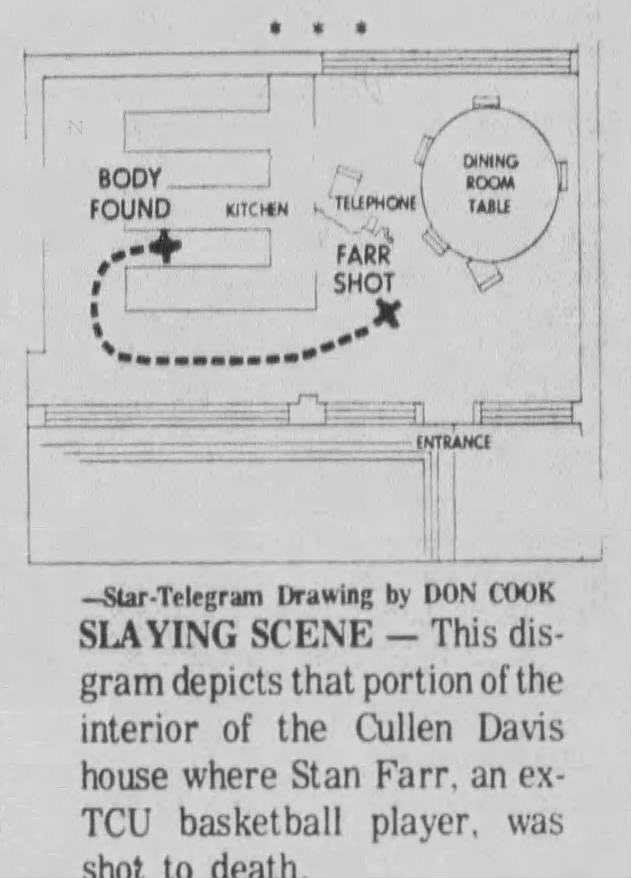
In the basement, 12-year-old Andrea Wilborn was shot, execution-style.
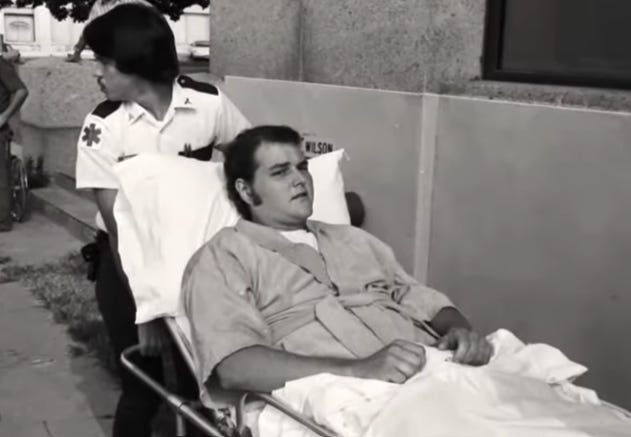
Upstairs, Priscilla was shot in the chest. The bullet pierced but did not kill her. Gavrel was shot and wounded as well.
The entire attack took minutes.
Then the gunman was gone.
Police arrived to a house that looked like something between a crime novel and a nightmare. Oil paintings on the walls. The indoor pool reflecting emergency lights. Blood in rooms designed for entertaining.
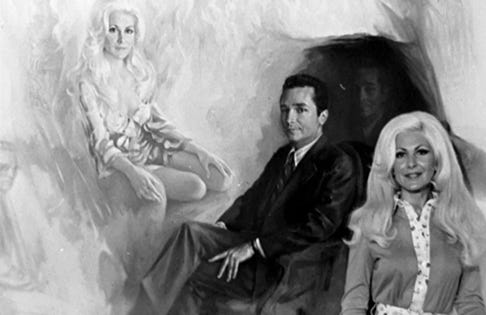
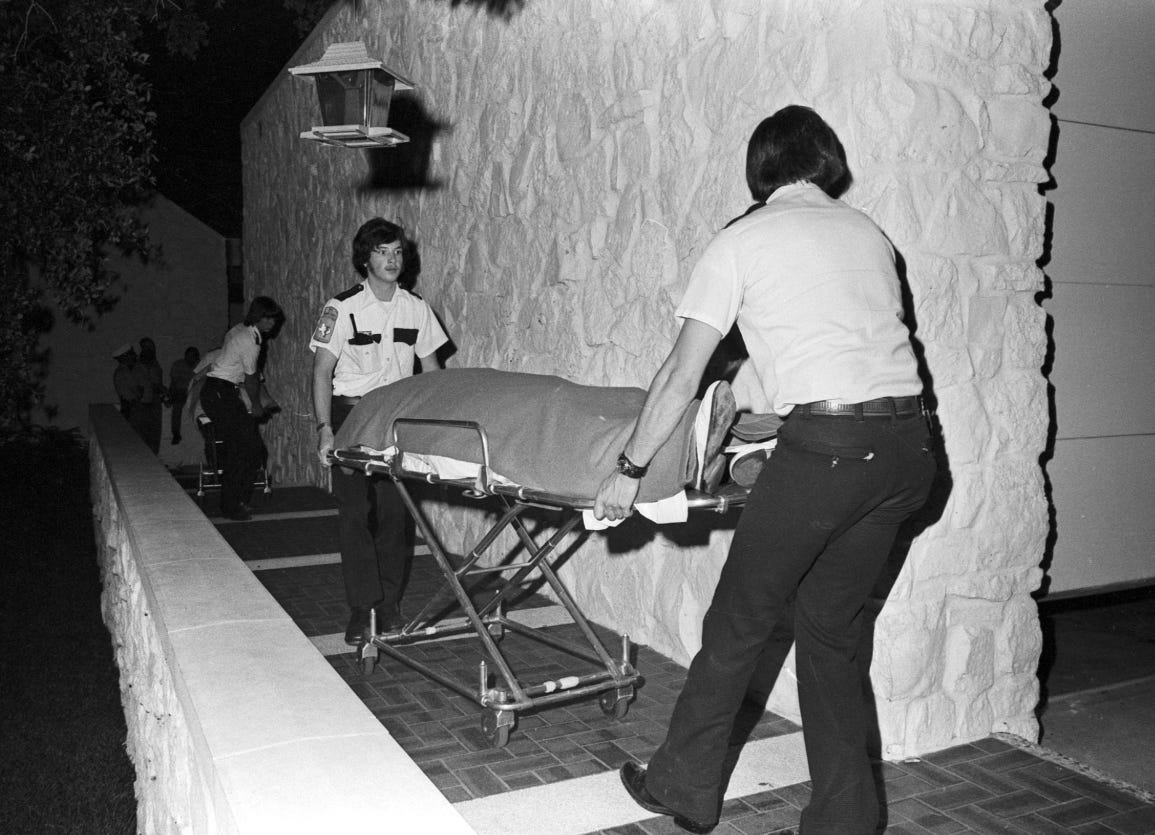
Three surviving witnesses identified T. Cullen Davis as the shooter.
They said they recognized his build. His voice. His movements.
On the surface, it looked overwhelming.
But the surface is not the courtroom.
Now, with stories like this, the people get lost. And I hate that.
The mansion becomes the headline. The lawyer becomes the legend. The verdict becomes the argument. Before it all though, there was people and I want to start to talk about them.
Andrew Wilborn
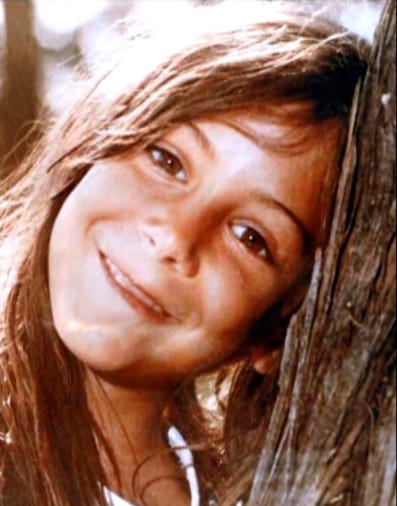
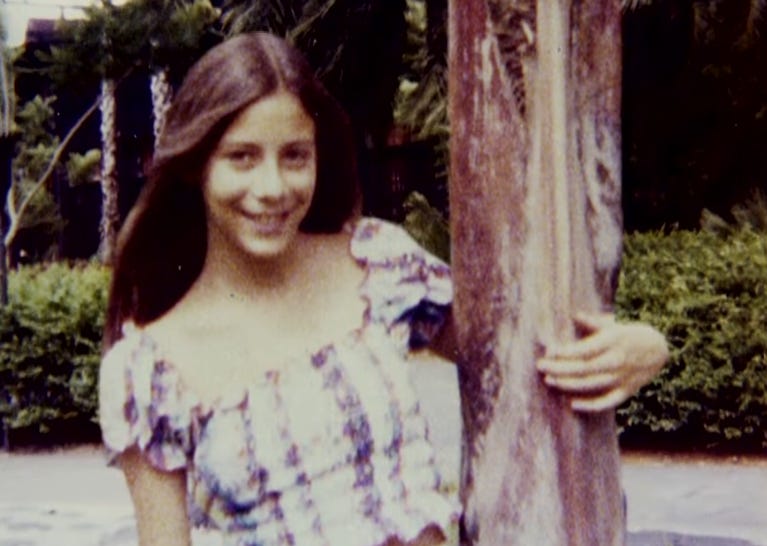
Andrea Wilborn was twelve years old.
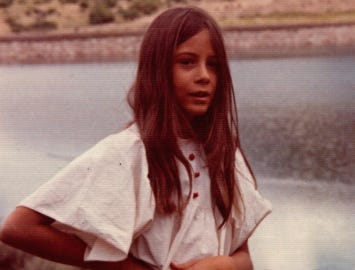
She loved horses. A lot. She had horse-poster-on-the-wall, riding-lessons-if-possible way. She was described as polite. Sweet. At twelve, she is in that soft space between childhood and adolescence, we’d call it a tween now, old enough to have opinions, young enough to still trust adults completely and that is part of why this is so terrible.
She was Priscilla’s daughter from a previous marriage, which meant she was not born into oil money. She was born into a family that suddenly found itself orbiting it. She lived in a mansion with tunnels and courtyards and an indoor pool, but she was still twelve. Still figuring out middle school, friendships, the world.
On August 2, 1976, she was in the basement of that house when the gunman came. That’s where police found 12-year-old Andrea’s lifeless body with a single gunshot wound to the chest. One report said She was shot execution style.
That detail, execution style, has been repeated so often that it risks becoming clinical.
It was not clinical. It was a twelve year old child.
Stan Farr
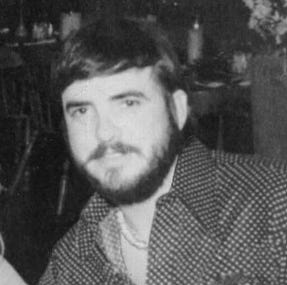
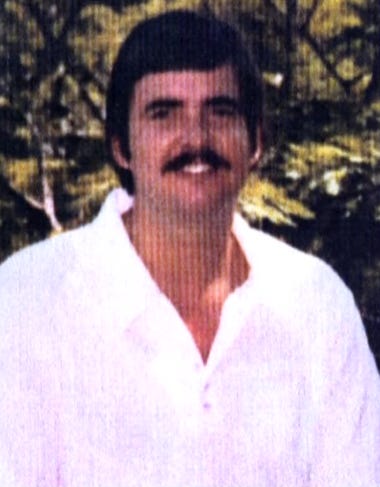
Stan Farr was twenty-nine.
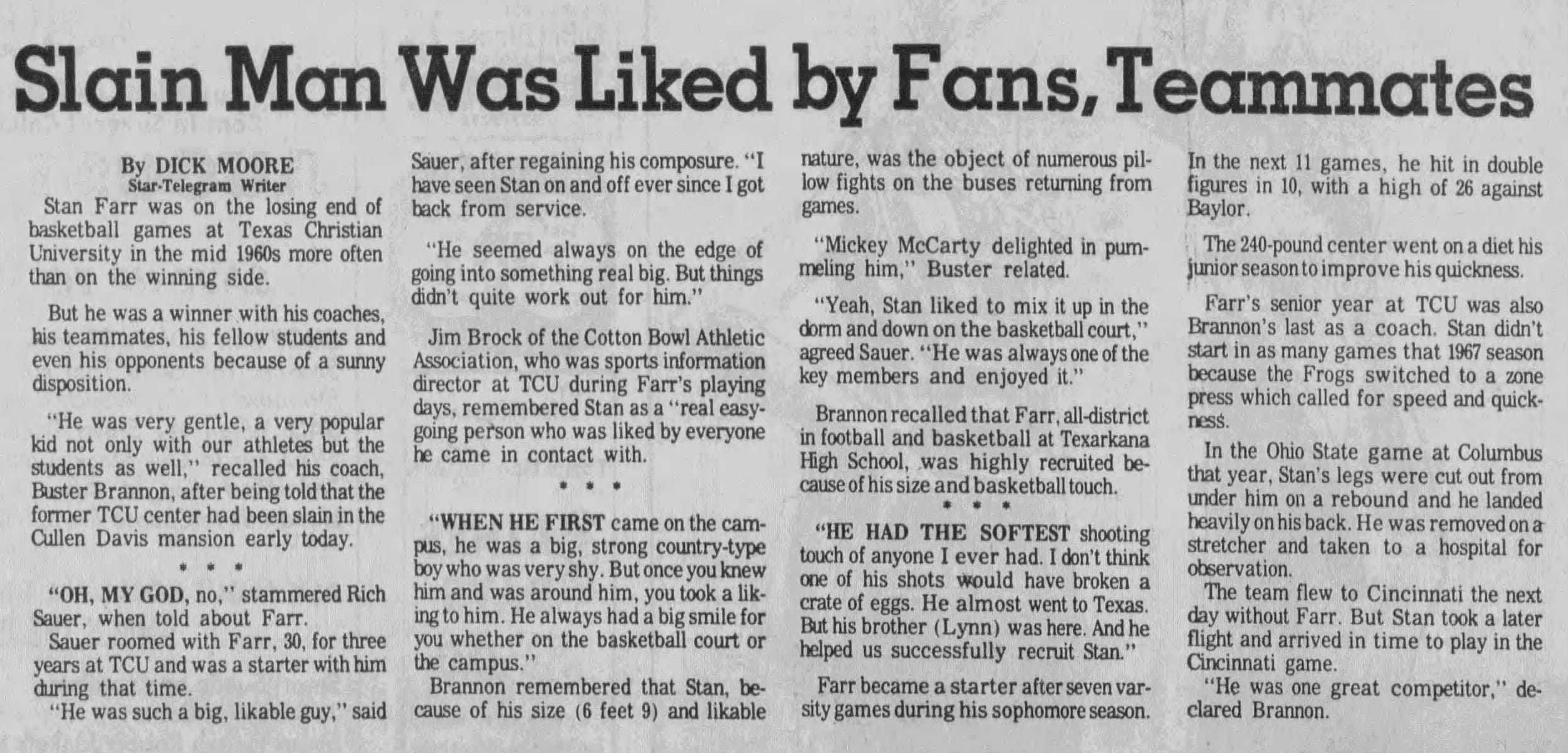
If you were around Texas Christian University in the early 1970s, you might have seen him play. He had been part of the Horned Frogs basketball program: tall, competitive, the kind of athlete who understands locker rooms and bus rides and the way teammates become brothers.
After college, he stayed connected to Fort Worth. Friends described him as loyal. Steady. The sort of man you call when you need help moving furniture or talking through something.
On that night, he was in the kitchen of the Stonegate mansion. Wrong place. Wrong time. He was shot and killed.
His children grew up without him.
Years later, they would file a wrongful death suit. Try to put a number on a father. Try to reduce a lifetime of missed birthdays and ballgames to a line item.
It doesn’t work.
Gus “Bubba” Gavrel
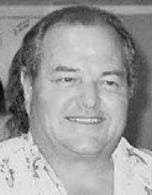
Gus “Bubba” Gavrel, well, You don’t usually mean to step into history. Most of the time, you’re just driving someone to a house.
That’s how it was for Gus “Bubba” Gavrel on the night of August 2, 1976. He drove his girlfriend, his future wife, Beverly Bass to the Cullen Davis mansion. She planned to spend the night there. That’s it, an ordinary night.
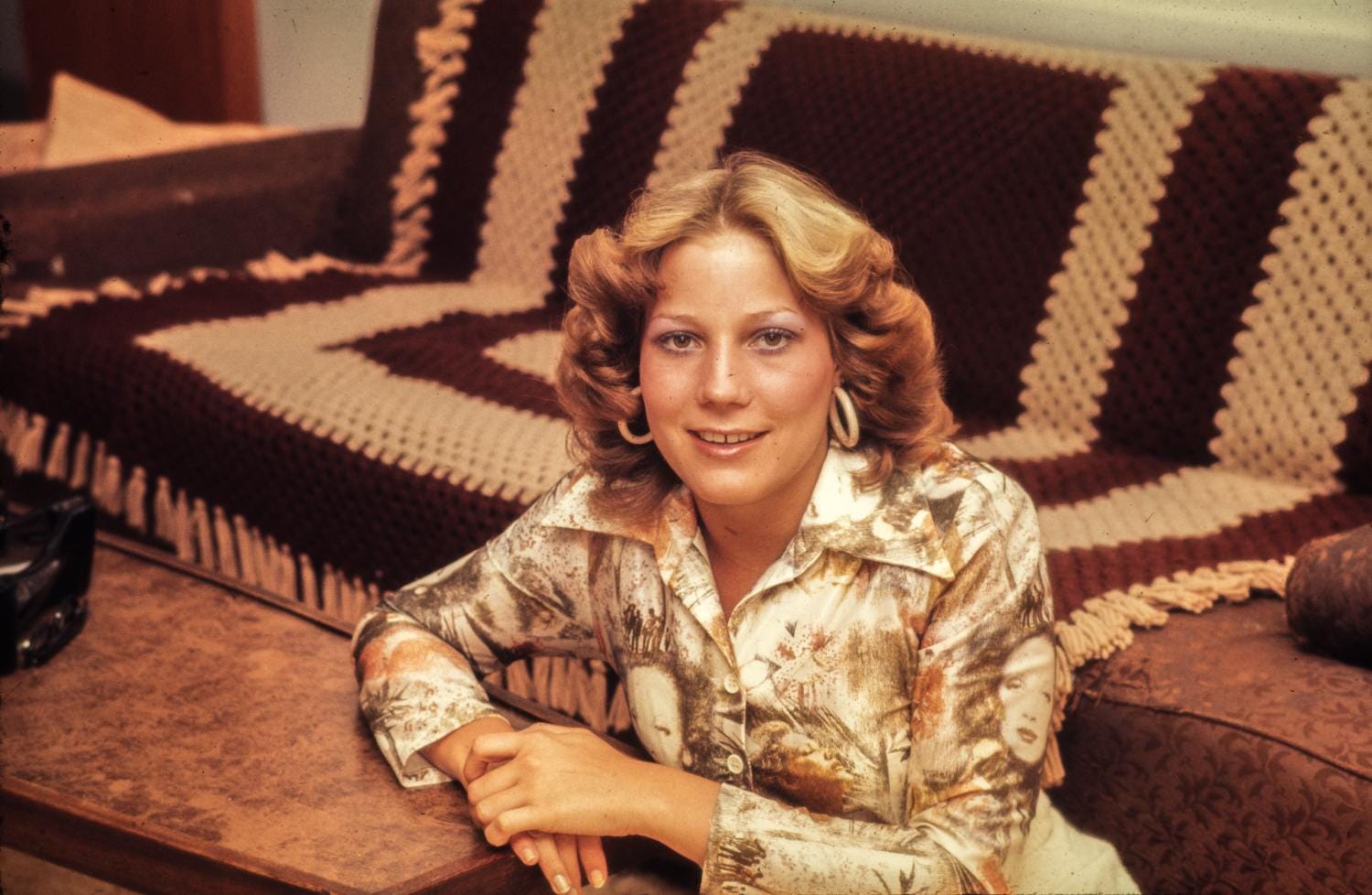
“He was just driving her over to the house and when they got there they heard some voices,” former Tarrant County District Attorney Joe Shannon later said. Shannon was one of the prosecutors in the capital murder trial in Amarillo. “I think he was just going to walk her to the door.”
That’s all.
Walk her to the door.
Former Assistant District Attorney Jack Strickland, who prosecuted Davis in later trials, put it even more plainly: “If he had been 10 minutes earlier or five minutes later, none of this probably would have happened to him.”
Ten minutes.
Five minutes.
History often hinges on less.
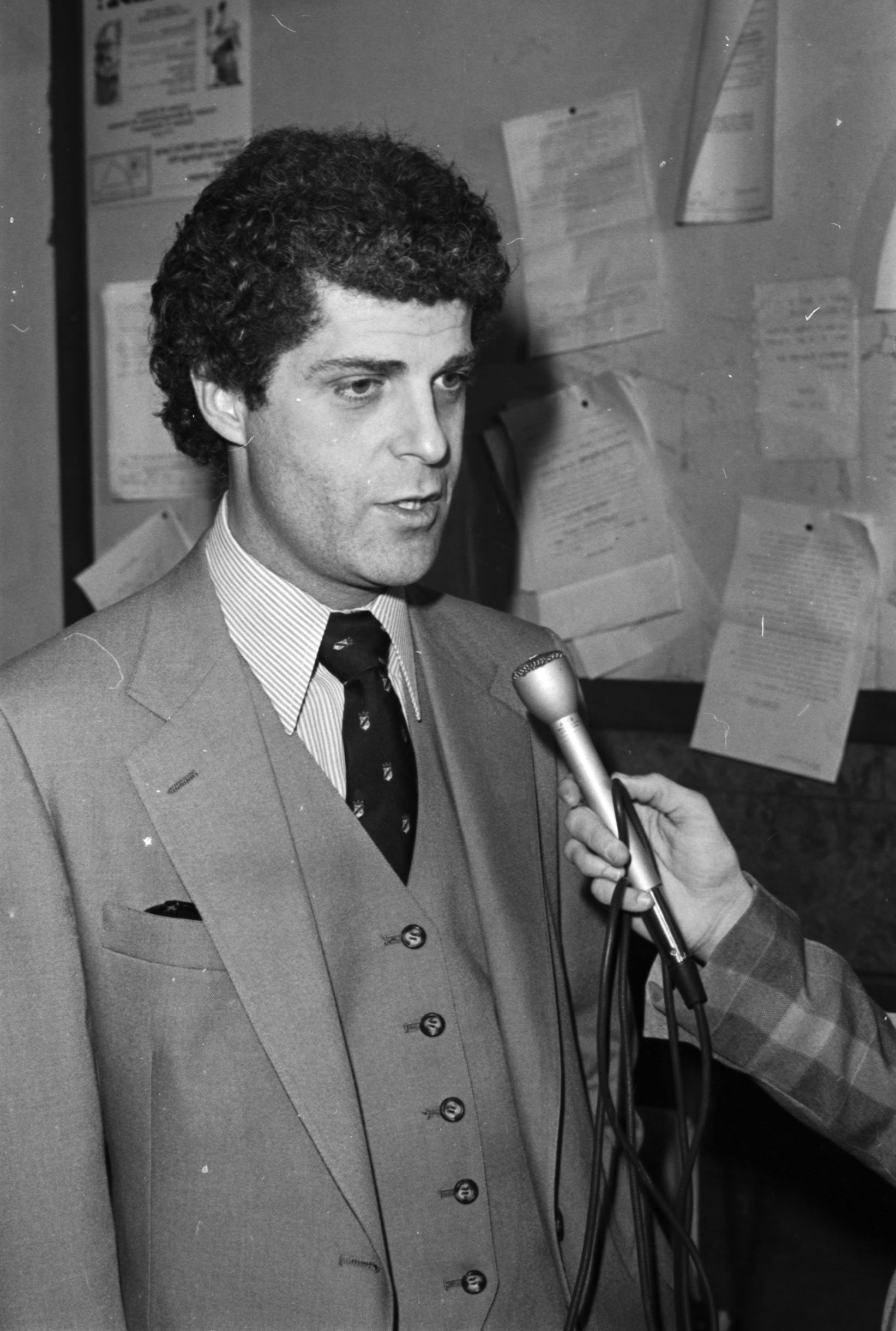
When Gavrel and Beverly arrived at the mansion, something felt off. Voices. Tension. The kind of split-second awareness you only understand later. And then gunfire.
Gavrel was shot.
He survived, but survival can be misleading. Surviving means testifying. It means sitting in a courtroom while one of the wealthiest men in Texas sits at the defense table. It means answering questions under cross-examination from Richard Haynes, who knew how to press gently until certainty felt thinner.
Survivors don’t just survive physically. They carry it forward.
And this is where the human story gets swallowed.
Priscilla Davis
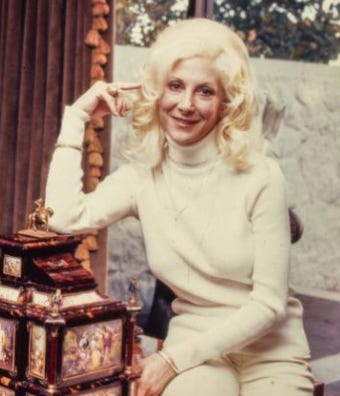
Priscilla Davis is often reduced to adjectives: glamorous, controversial, socialite, as if she were a character in someone else’s drama.
She was more complicated than that.
She survived being shot in the chest. She survived one of the most publicized murder trials in Texas history. She endured cross-examination that dissected her marriage, her motives, her lifestyle. In the 1970s, the courtroom treatment of women, especially in high-profile divorce cases, was not gentle.
She was alternately portrayed as victim and manipulator, survivor and instigator, depending on who was telling the story.
While many judged her, she carried the memory of that night for the rest of her life.
Andrea Wilborn never got that chance.
She is frozen in time at twelve years old. Forever the child who loved horses. Forever the girl in the basement of a mansion that was too large for what it held that night. In legal terms, her case was adjudicated. In human terms, it was never resolved.
The Trials
There was no murder weapon definitively tied to Davis. No fingerprints on a gun. No clean physical evidence placing him there in the act. What prosecutors had was motive and eyewitness identification.
What the defense would argue was doubt.
And if you wanted to find doubt, there was one man to call. “Racehorse” Haynes. He did not walk into a courtroom. He entered it the way a headliner steps onto a stage. The J. Frank Norris of the court. Confident. Measured. Completely aware that everyone was watching.
And everyone was watching.
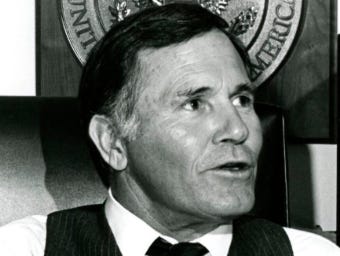
By the time the trial began in 1977, the Cullen Davis case had already become national news. Reporters from across the country descended on Texas. Courtroom seats filled early. Sketch artists worked nonstop. Every development led the evening broadcast. Oil wealth. A murdered child. A glamorous divorce. It had all the elements of what we would later recognize during the O. J. Simpson trial, money, celebrity lawyers, forensic arguments, and a public split clean down the middle.
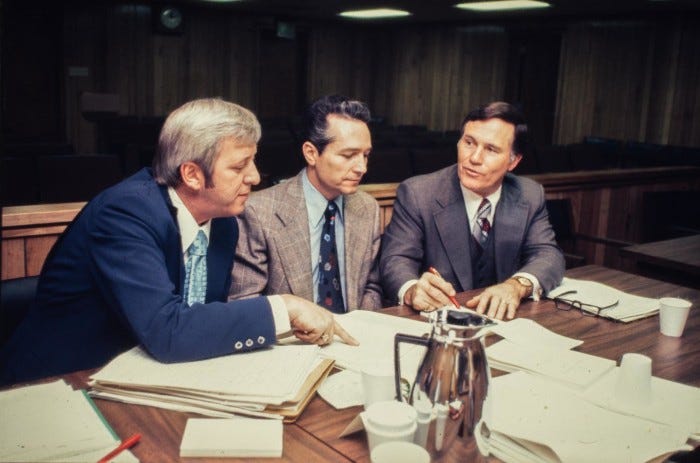
The trial was moved from Fort Worth to Amarillo, and that mattered more than people realized at the time. Amarillo jurors were removed from the gossip and social gravity of Fort Worth’s oil elite. They did not drive past the mansion on Stonegate. They did not attend the same parties. They were asked to focus on evidence, not atmosphere.
And evidence was where the battle lived.
The prosecution presented what looked, emotionally, like a powerful case. Three surviving eyewitnesses identified Cullen Davis as the shooter. They testified they recognized his build, his voice, his movements. They described a man dressed in black, wearing a black wig, moving deliberately through the house.
They emphasized motive: a bitter divorce and a $33 million settlement hanging over him like a financial guillotine. They framed it as rage and control. A wealthy man unwilling to lose power.
It was a compelling narrative.
But Haynes understood something essential about criminal trials: jurors do not convict on narrative. They convict on certainty.
So he attacked certainty.
He dissected eyewitness identification with almost academic precision. How well was the room lit? How long did the witness see the shooter? What does trauma do to memory? If someone is wearing a wig and dressed entirely in black, what exactly are you recognizing? A face? A silhouette? A voice in chaos?
He slowed everything down. Where the prosecution spoke in sweeping arcs, motive, revenge, execution-style killing, Haynes spoke in inches.
Was there a fingerprint? No.
Was the murder weapon conclusively tied to Davis? No.
Was there physical evidence placing him inside the house at the moment of the shootings? No.
He didn’t need to prove an alternative suspect beyond doubt. He just needed to suggest that the state’s version left room for hesitation.
And hesitation is oxygen for a defense attorney.
The courtroom became theater, Tense theater. Haynes would lean in during cross-examination, pressing witnesses gently, almost politely, until their confidence seemed to thin just enough.
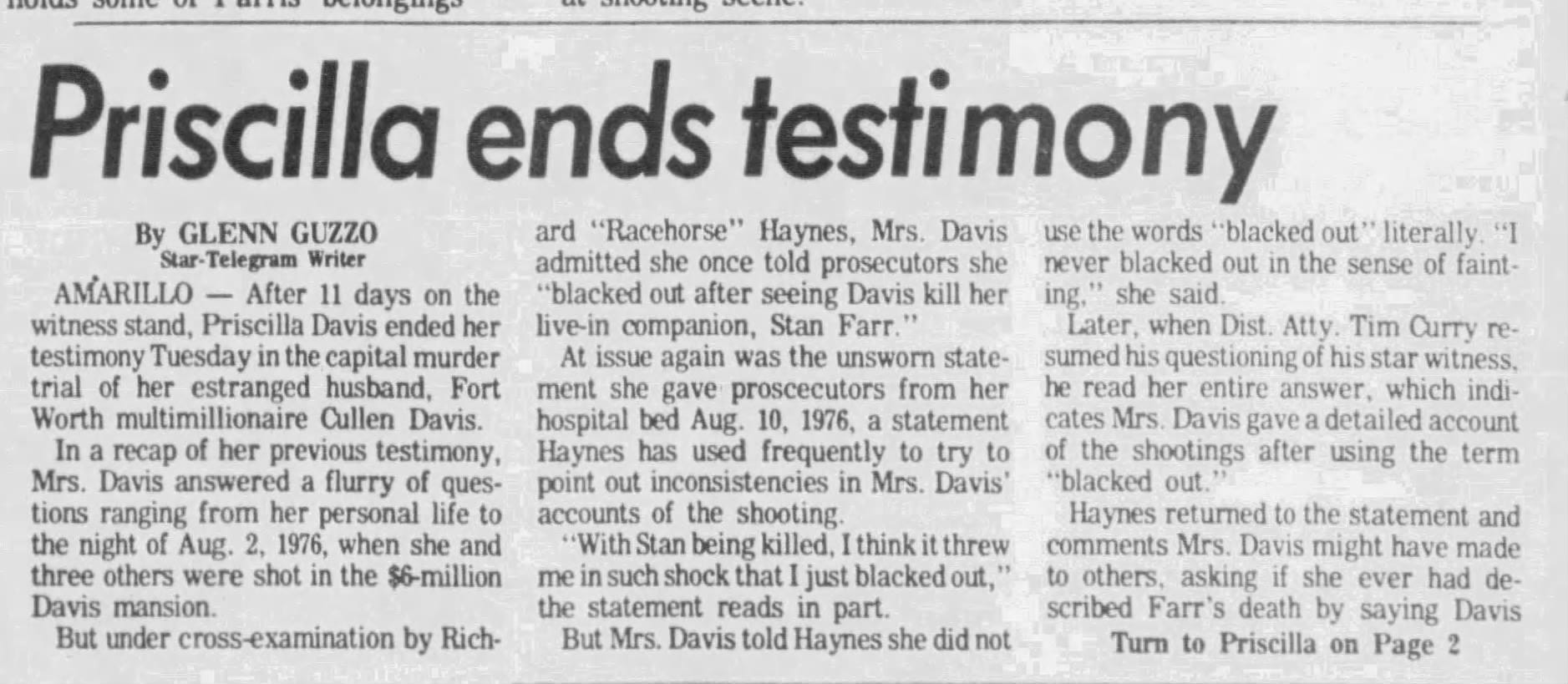
The prosecution tried to restore that confidence, reminding jurors of the brutality of Andrea Wilborn’s death. They emphasized the consistency of the eyewitnesses. They underscored motive again and again.
It became a duel between emotion and doubt.
Outside the courtroom, Fort Worth argued in restaurants and country clubs and church foyers. Some believed justice was obvious. Others believed the state was overreaching. Oil money was whispered about constantly, how much it cost to mount that defense, how many experts were hired, how no ordinary defendant could afford such strategy.
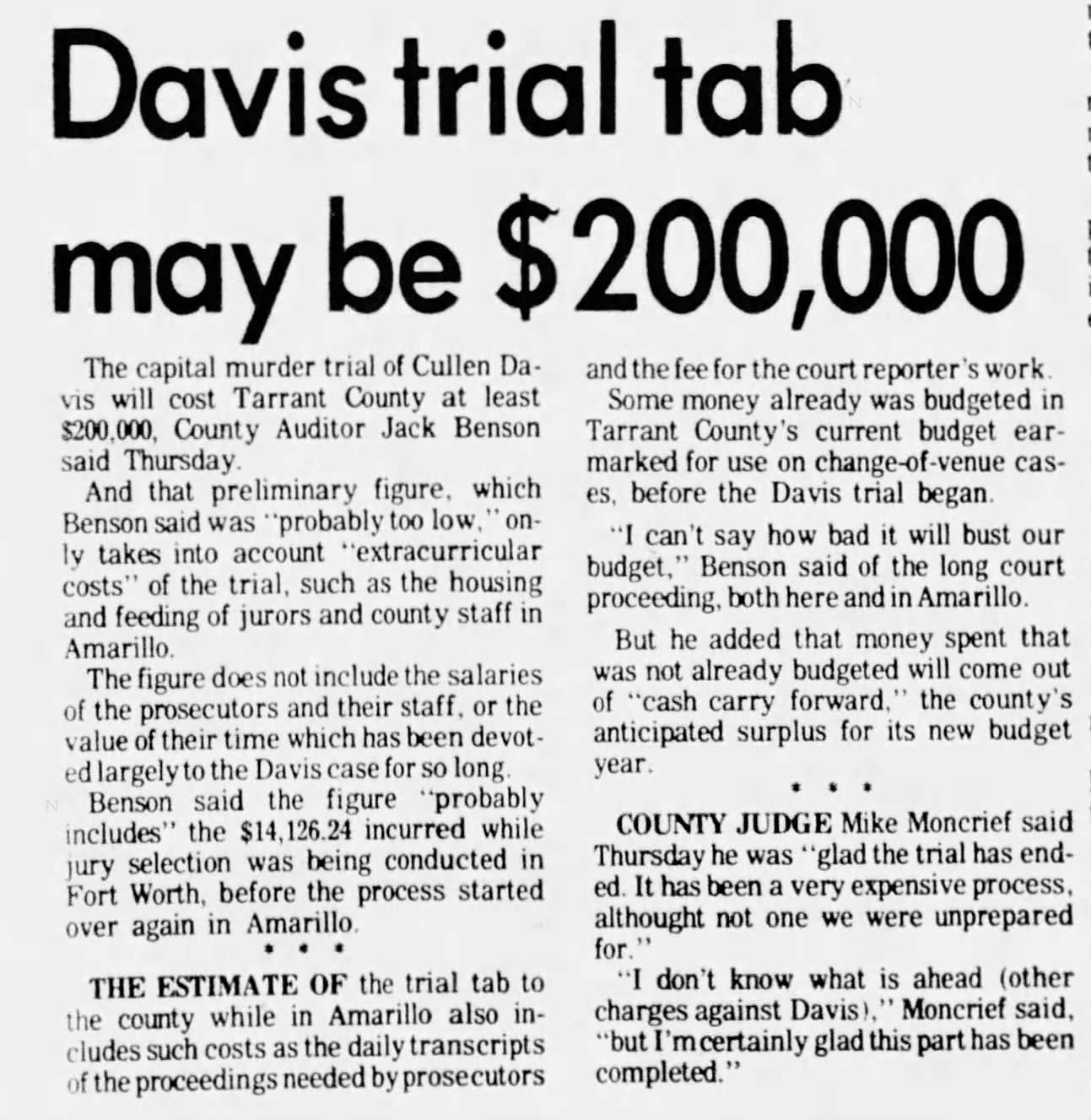
Inside the jury room, though, those whispers were irrelevant.
The standard was not “probably.”
It was not “most likely.”
It was beyond a reasonable doubt.
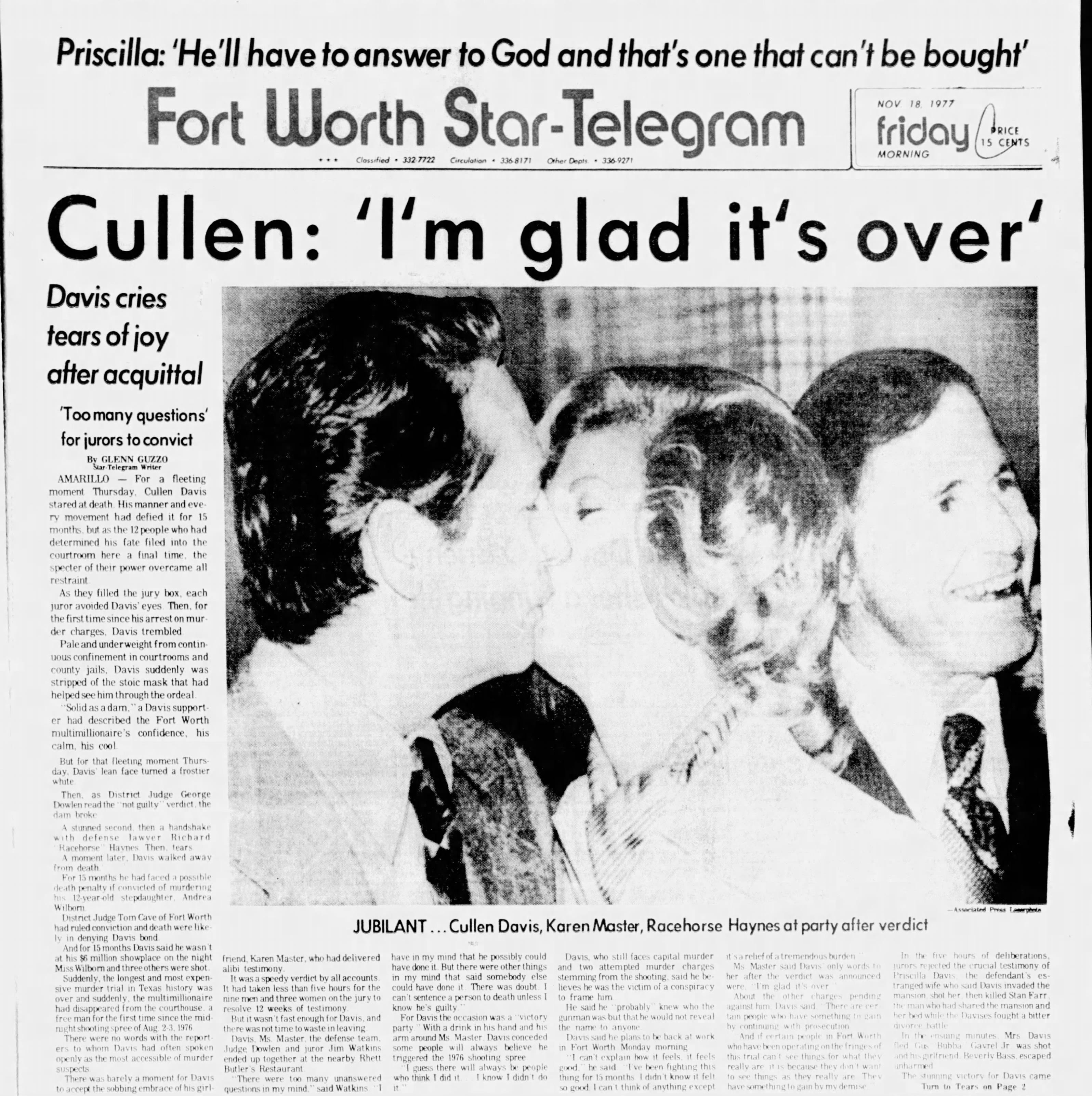
In November 1977, after weeks of testimony and intense deliberation, the jury returned its verdict: not guilty.
There was one detail that never made it into the courtroom. Cullen Davis claimed to have been watching “The Bad News Bears” at a theatre during the murders and then went home to Karen Master’s home.
However, many sources and papers have brought up the movie was not showing at the theater the night of the murders and that information was never brought up at the trial. (this whole interview with Cullen Davis and John McCaa can be seen here)
Jumping back a little bit to 1978, Cullen Davis was arrested again.
This time, prosecutors alleged he had hired a hitman to murder both Priscilla Davis and the judge overseeing their ongoing divorce proceedings.
The alleged meeting took place in the parking lot of Coco’s Famous Hamburgers. The supposed hitman was actually an undercover operative named David McCrory. Their conversation was secretly recorded.
The tape became the centerpiece of the state’s case.
It sounded, to many, incriminating.
But this trial took an unusual turn. It became one of the first major American cases to introduce forensic discourse analysis, experts analyzing the language used on a recording to determine whether it legally constituted solicitation of murder.
A linguistic expert testified that Davis’ words did not amount to a clear request to kill.
Again, Richard Haynes defended him. Again, he attacked physical evidence. Davis’ fingerprints were not found on the cash allegedly offered as payment. The chain of proof was questioned. The defense argued entrapment. They argued ambiguity.
Unlike the first murder trial, Davis testified in his own defense. He claimed the entire scenario had been orchestrated by Priscilla and that he was merely playing along in an effort to expose what he believed was a setup.
Public opinion this time was less confident. Many believed he might not escape again. Some predicted a hung jury.
Instead, he was acquitted a second time.
Two criminal trials. Two acquittals. Civil litigation largely unsuccessful for plaintiffs.
The legal system had spoken repeatedly.
I often wondered why Tim Curry didn’t go after Cullen Davis again, on charges for Stan Farr’s murder. My guess is after the Amarillo jury said not guilty in the capital murder trial for Andrea Wilborn, the air sort of went out of the room for prosecutors.
The case against Cullen Davis in the killing of Stan Farr rested on the same bones, the same masked-man theory, the same witnesses, the same fragile chain of circumstantial proof, and once a jury had already decided they weren’t convinced he was that masked gunman, it was hard to imagine twelve new strangers suddenly seeing it differently.
Yes, they could have tried again; double jeopardy didn’t block the door. But trials are not just about law, they are about momentum, and after that first acquittal, the momentum belonged to Davis. So under District Attorney Tim Curry, the state read the room, weighed the odds, and chose not to roll the same dice twice. You have to wonder if, in today’s forensic world, the outcome would have been different.
The Settlements
After the criminal acquittal came something quieter, but no less important.
Civil court.
Criminal court asks one question: Did the state prove guilt beyond a reasonable doubt?
Civil court asks a different one: Is someone financially responsible by a preponderance of the evidence, meaning more likely than not?
It is a lower bar. The burden shifts. The tone changes. The cameras thin out a little, but the stakes are still deeply personal.
In the wrongful death case concerning Andrea Wilborn, the hope for some was that civil court might accomplish what criminal court had not. Even if prison time was off the table, perhaps there would be accountability in the form of damages.
But Cullen Davis prevailed there, too.
He was found not liable for Andrea’s death.
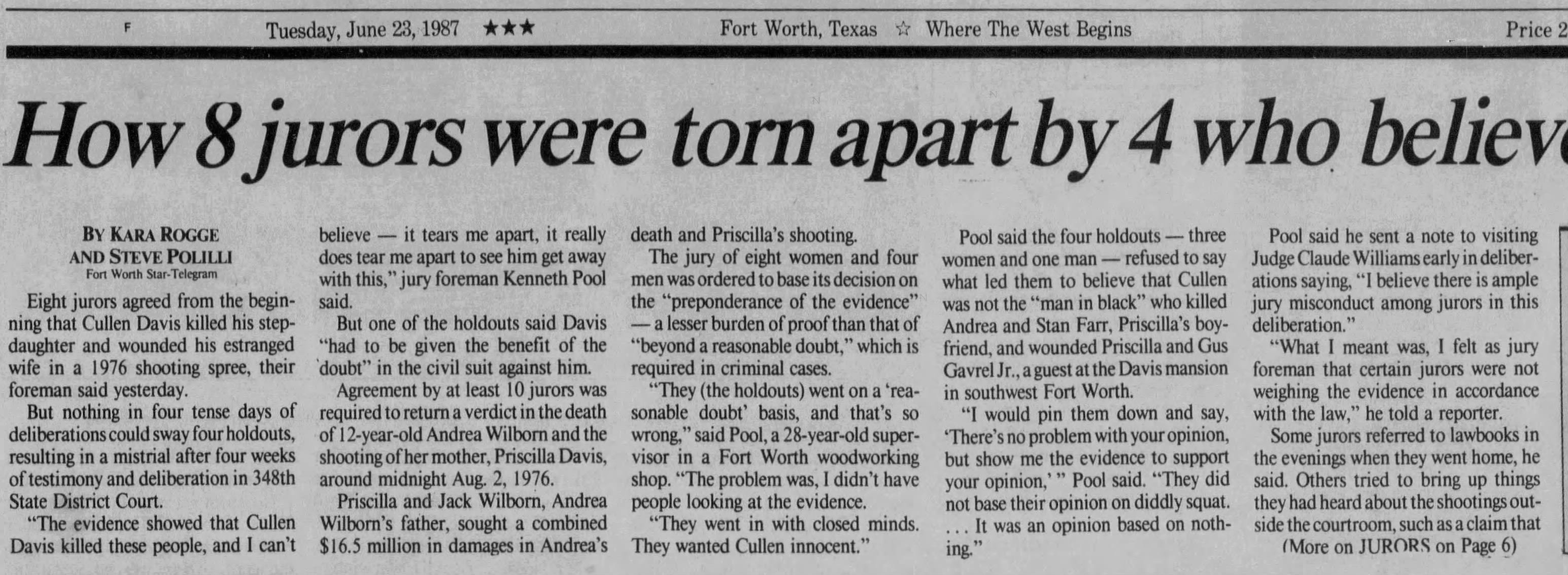
Think about that for a moment. In criminal court, the jury must be nearly certain. In civil court, they need only tip slightly in one direction. And even at that lower threshold, the case did not move against him.
For Andrea’s memory, for those who believed the criminal trial had failed, that civil ruling felt like a second verdict.
Stan Farr’s story took a slightly different path.
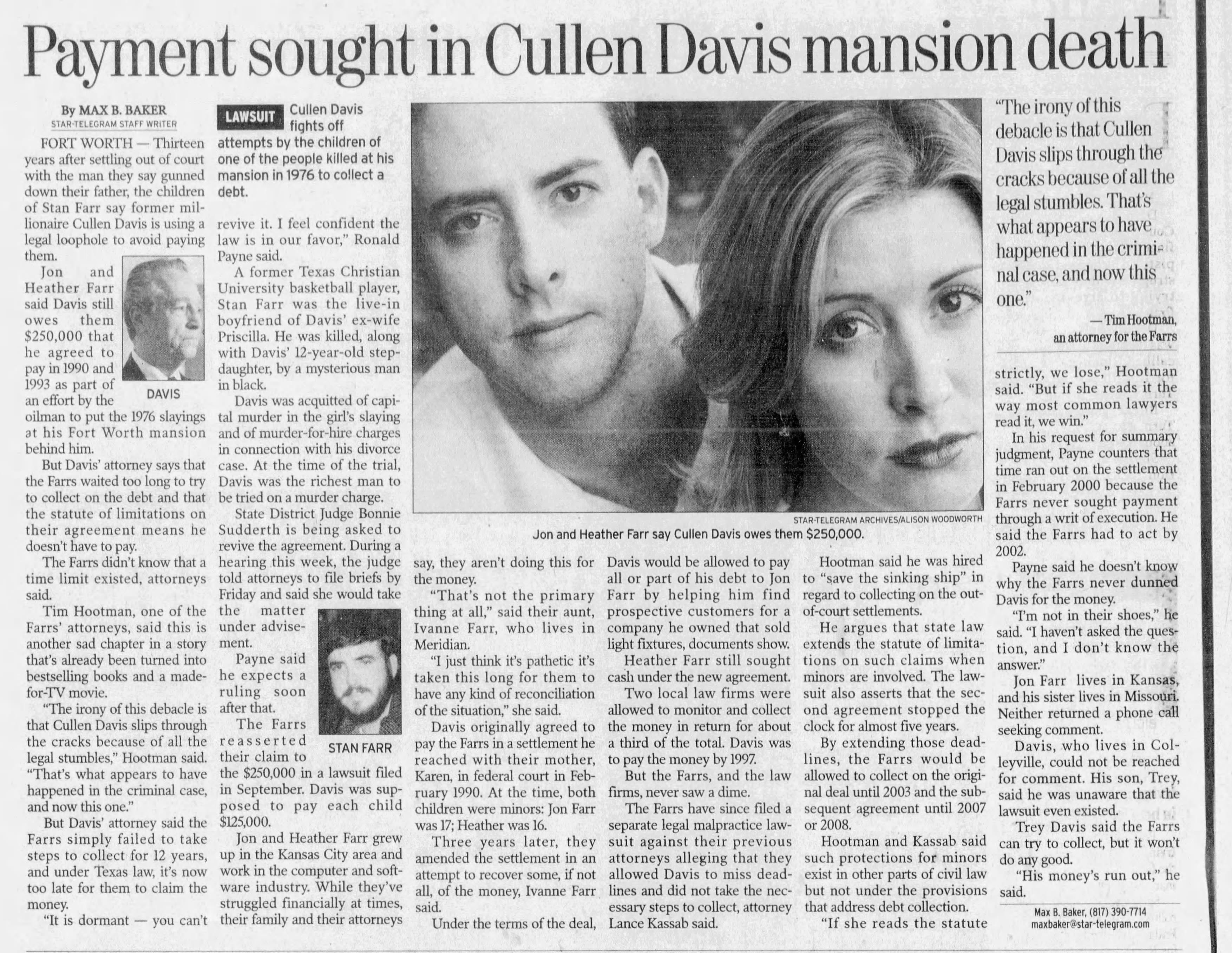
His children, who had already endured the criminal acquittal for Andrea, filed a wrongful death lawsuit.
Ultimately, the case did not end with a dramatic jury verdict. It ended with a $250,000 out-of-court settlement in 1990.
Two hundred and fifty thousand dollars. One hundred and twenty five thousand per child. That is the price of a father?
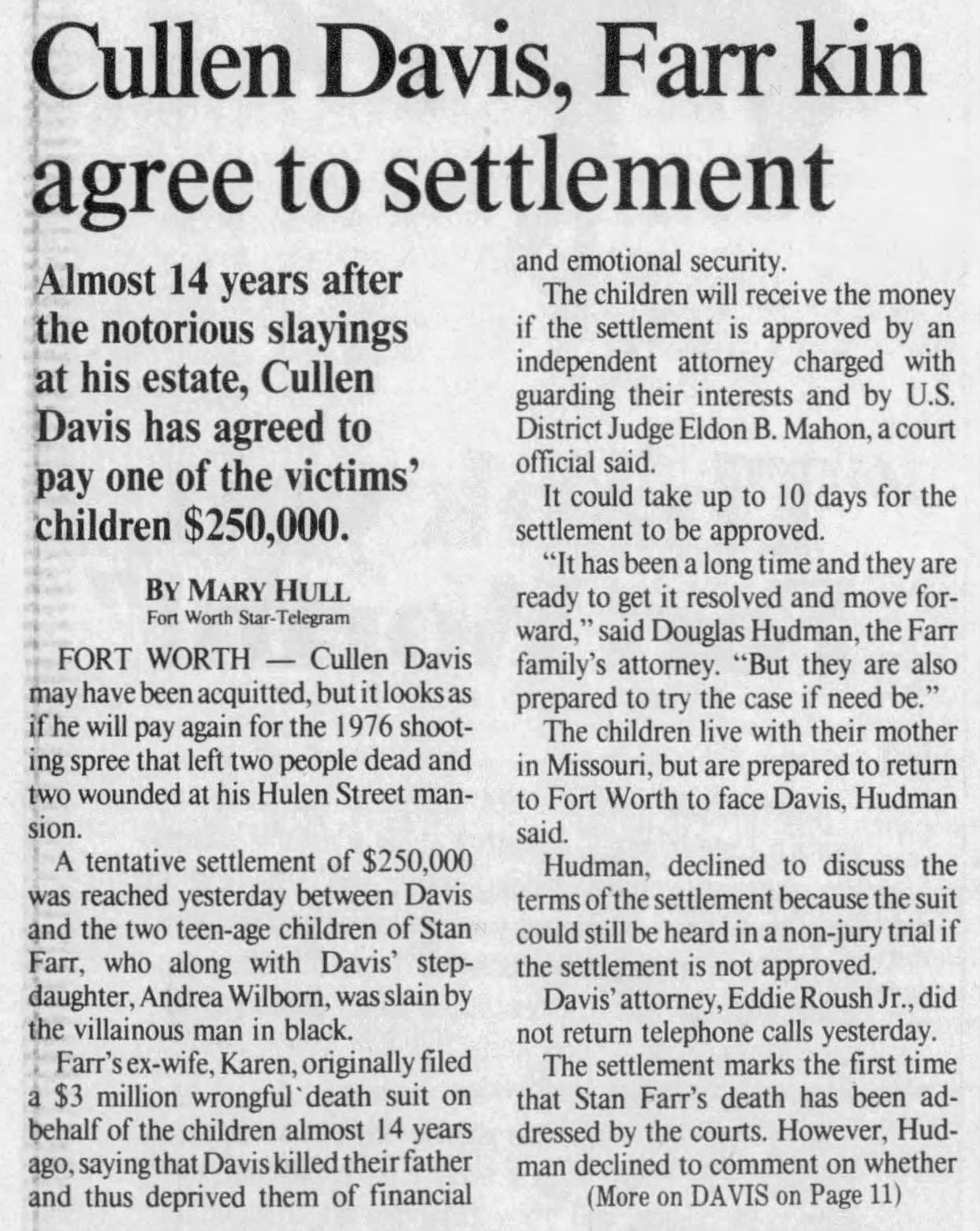
Even in the early 1990s, it was a modest figure in the context of oil wealth and a case that had consumed millions in legal fees. It was not an admission of guilt. Settlements rarely are. They are agreements to end the fight.
For the Farr family, it meant closure of a legal chapter. It did not restore a father.
And still, it wasn’t over. Davis never paid them by 1993 as promised. He still hasn’t.
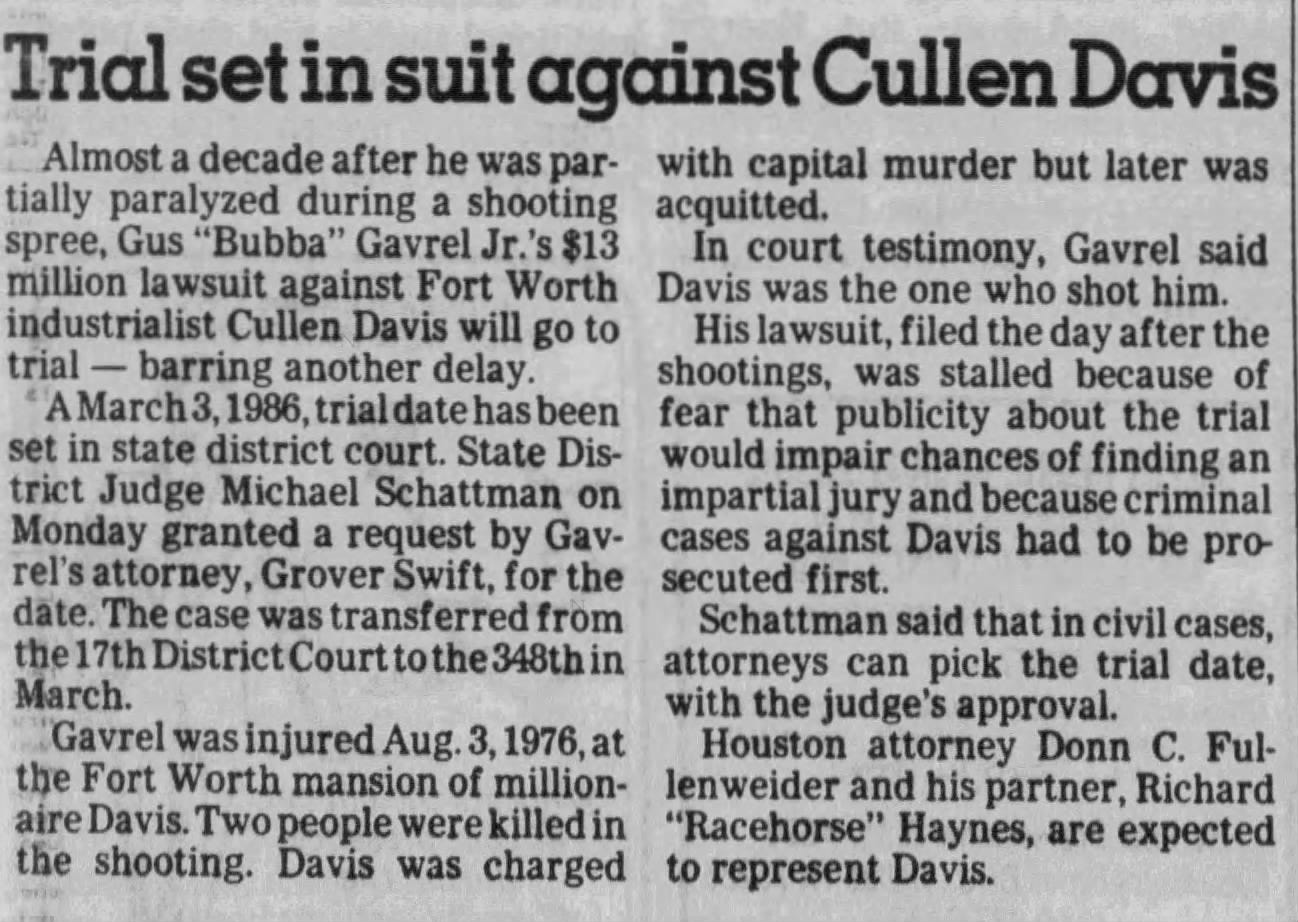
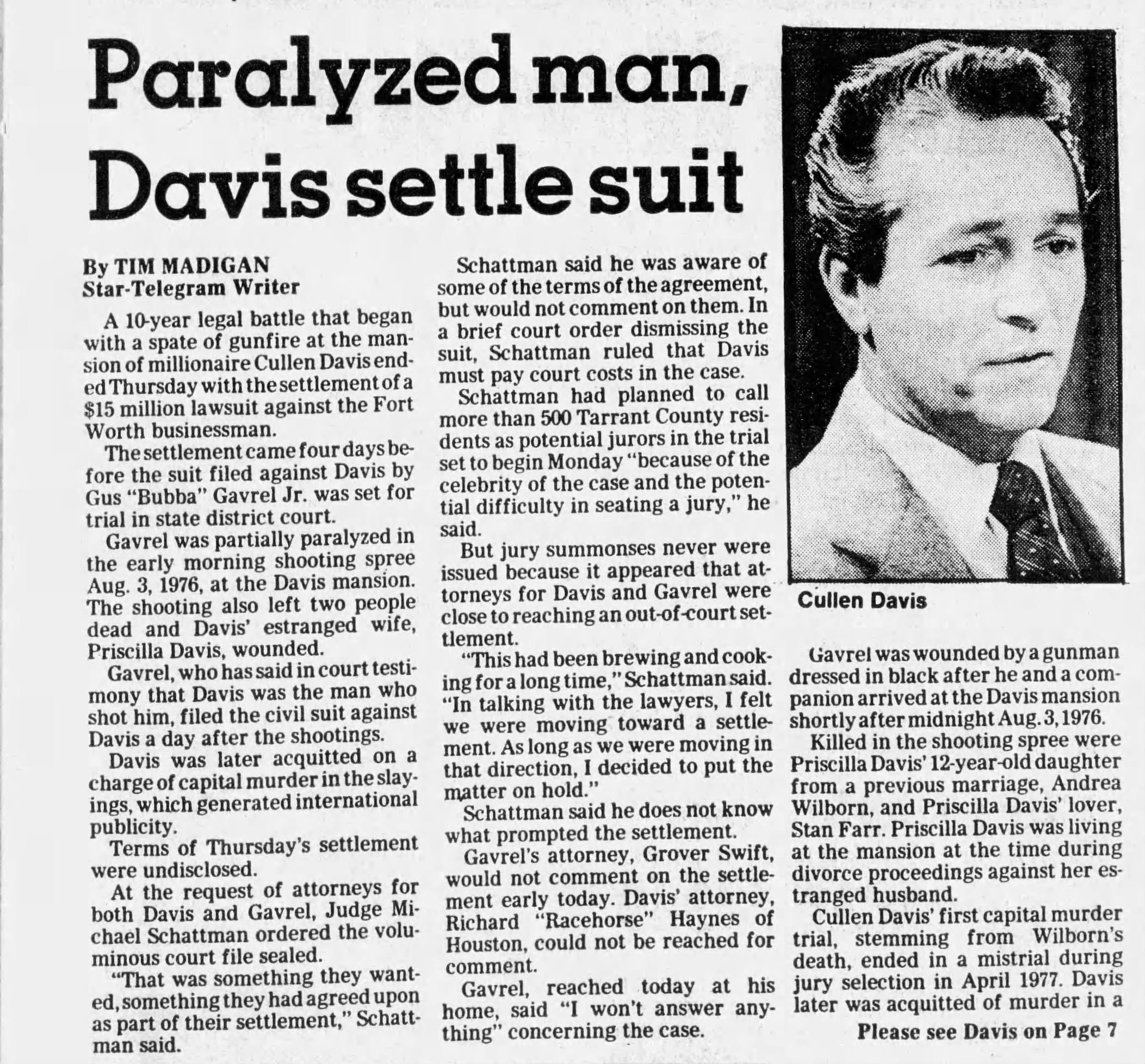
Gus “Bubba” Gavrel Jr. filed a 13 millions dollar suit against Davis in 1976. but didn’t receive anything until April of 1986, when Davis gave 70 acres of land to him as part of a suit settlement. In addition to the land worth about $314,000, Davis agreed to pay the partially paralyzed victim, an undisclosed amount of cash, The Dallas Morning News reported.
The Ending
Gus “Bubba” Gavrel Jr., who was shot and paralyzed in the infamous 1976 shootings passed away in 2019. Had he arrived 10 minutes earlier or later, the rest of his life would have been much different.
After the trials ended, after the cameras packed up and Amarillo jurors went back to their lives, the people in this story did what people always do.
They kept living.
Or they tried to.
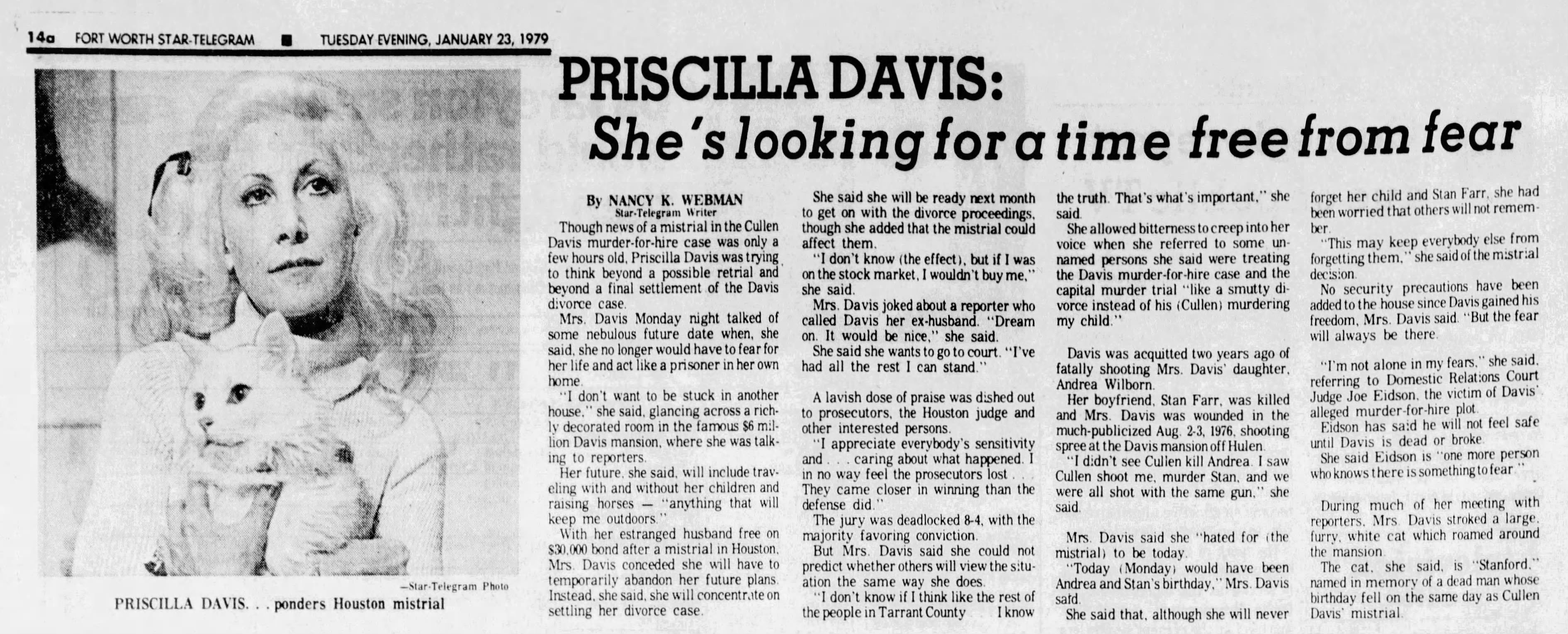
Priscilla Davis became, in a strange way, both a survivor and a symbol. She had survived a gunshot wound. She had survived public scrutiny that dissected her marriage, her motives, her wealth, her grief. She was painted, depending on the storyteller, as victim, socialite, manipulator, heroine.
But underneath the headlines, she was a mother who had buried her daughter.
That is not something you spin your way out of.
She rebuilt her life in the years that followed. She later dated Assistant District Attorney Jack Strickland for a few years. They planned on getting married, but that news didn’t go over well in the press and they called it off. She remained part of Texas high society. Ran up a She was photographed, interviewed, written about. Friends say that by 1982 she had a $1.1 million outstanding balance at Neiman Marcus. Later , while suffering from alcoholism, Priscilla moved into a one-bedroom apartment in Dallas in 1991. Despite that in interviews later in life, there was always a trace of steel in her tone, resilience layered over memory. She battled breast cancer and died in 2001.
And then there is T. Cullen Davis. Still alive in 2026. Some names feel frozen in the 1970s. His isn’t. Sometimes certain people, still being alive in 2026 is surprising. To me, it is Cullen Davis and Lee Harvey Oswald’s wife, Marina Oswald Porter. Surprised, for different reasons, but still shocked to see they both live in North Texas still.
Davis, well, his oil empire, once vast and confident, eventually crumbled. The boom years faded. Bankruptcy came in 1987. The fortune that built the mansion could not protect against economic downturns and business missteps.
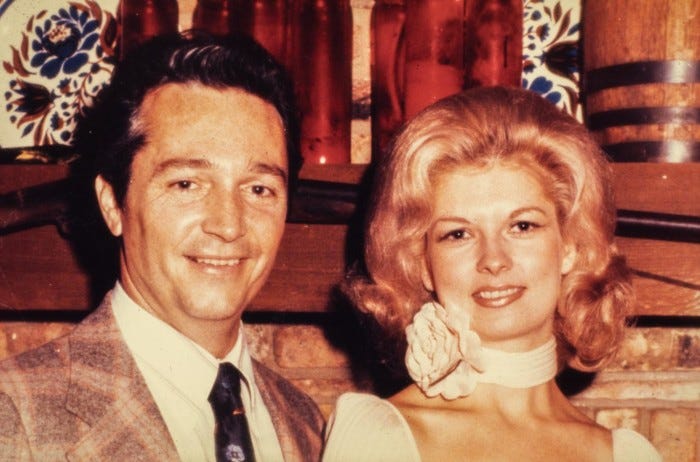
He married for a third time, this time to Karen Master. Master was Davis’s third wife and remained with him until her death in 2016.
The house itself, that angular monument to oil wealth, changed hands. It became a Mexican restaurant. Then a church. Then an event venue where weddings were held in rooms that once held crime scene tape.
In 2021, demolition crews tore it down.
Right before that, Davis visited the mansion with WFAA’s William Joy.
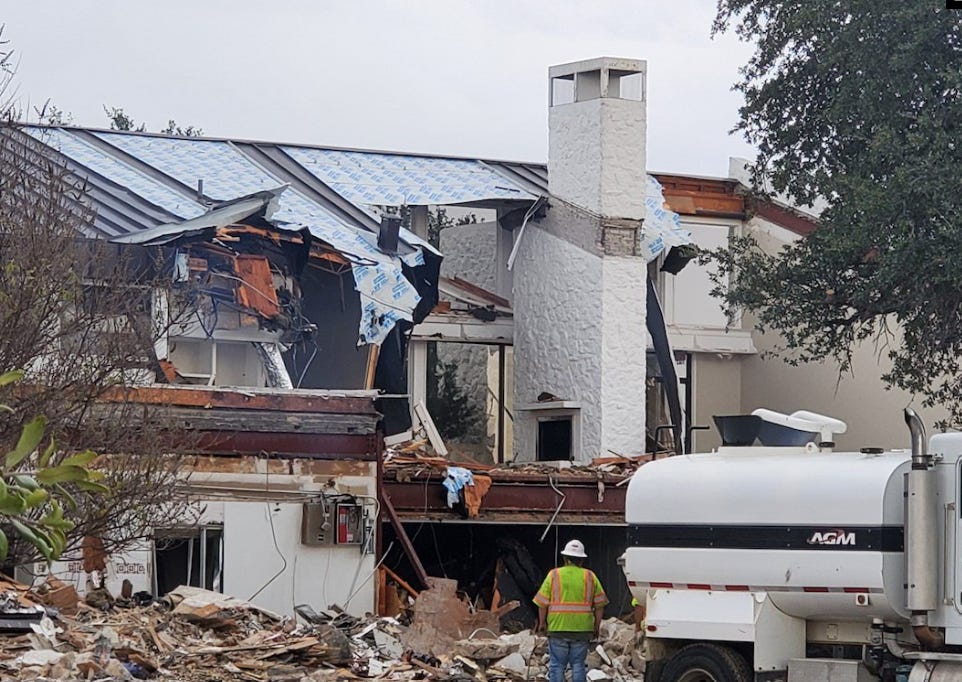
Concrete cracked. Walls fell. The indoor pool disappeared beneath rubble. A structure that had once symbolized invincibility vanished in a matter of weeks.
In 2015, Tarrant County officials chose to preserve the paper court documents from the case, even after digitization. Not because they needed the storage space. Because they recognized something.
This was not just a murder trial.
It was a moment when Texas law, media, wealth, forensic science, and public opinion collided. Many still call it the O.J. trial before O.J., a case where money funded an extraordinary defense, where forensic techniques were tested, where verdicts divided a city.
Cullen Davis continues to reside in the Fort Worth area.
He has never been held criminally responsible for the murders. He was not found liable in the civil case concerning Andrea Wilborn. The Farr family reached a settlement, but has never received a dime.
Legally, the matter is closed.
He has never been held criminally responsible for the murders.
When I think about that balcony near Texas Christian University, I don’t see the glass and concrete anymore.
I think about verdicts.
The law requires proof beyond a reasonable doubt. That standard protects the innocent. It is essential.
But it does not promise justice will feel complete.
Fort Worth remembers its buildings. We argue about what should have been saved and what should have come down. The mansion built by T. Cullen Davis is gone now. Torn down. Erased from the skyline.
What isn’t erased are the names.
Andrea Wilborn.
Stan Farr.